Best Tools for Selling Concert and Festival Tickets on WhatsApp in 2026
Your WhatsApp inbox fills with "Is this ticket still available?" while buyers wait hours for a reply. Miss that window and they buy from someone else. That is why promoters and festival organizers are moving ticket sales off link-in-bio pages and into WhatsApp itself.
This article breaks down what actually matters in a ticketing tool: native payments, bulk messaging, and bot automation. You will get a clear comparison of eight platforms, from Com.bot to Wati, plus criteria for choosing the right one and a definitive number one pick.
What to Look For in WhatsApp Ticketing Tools for Concerts and Festivals
Concert and festival ticketing is not like selling everyday retail items. Demand arrives in violent spikes: a lineup announcement drops, a presale opens, and thousands of fans try to buy within the same hour. Any tool that buckles under that pressure costs real revenue.
Fans also expect instant gratification. They want to tap a link, pay inside the chat, and receive a scannable ticket in seconds, not wait for an email that lands in a spam folder. Speed and reliability matter more here than in almost any other ticketing category.
On top of that, organizers face a security problem. Sold-out events attract fraud, duplicate tickets, and chargebacks, so a credible platform needs built-in verification and audit trails. Trust is part of the product.
When evaluating WhatsApp ticketing tools for concerts and festivals, event organizers must prioritize capabilities that streamline high-volume sales, secure payments, and real-time fan engagement. The criteria below cover the capabilities that separate a tool built for a weekend market from one built for a stadium show.
Native Payments, Bulk Messaging, and Bot Automation Capabilities
A ticketing tool's effectiveness hinges on three core capabilities: native payment processing within WhatsApp, the ability to send bulk messages without triggering spam filters, and advanced bot automation for personalized interactions.
Native payments keep the buyer inside the chat. Through payment gateway integration with providers such as Stripe, PayPal, or WhatsApp Pay, fans complete in-chat checkout without being redirected to a separate browser page. Every redirect is a drop-off point, and removing it lifts completion rates during high-pressure presales.
Bulk messaging handles the promotional side. Broadcast lists and WhatsApp Channels let organizers announce lineups, share presale codes, and push reminders to segmented audiences. Audience segmentation matters here: a VIP buyer and a general admission fan should not receive identical messages.
Bot automation runs the transaction itself. A conversational ticketing flow can answer questions about tiers and seating, collect buyer details, confirm payment, and deliver QR code tickets instantly. The same bot then supports e-ticket validation at the gate, scanning codes and flagging duplicates in real time.
These capabilities work best as one loop. A fan sees a Channel post, messages the bot, pays in-chat, receives a digital ticket, and gets a reminder the day before the show. Tools that also connect to a CRM such as HubSpot or Salesforce can sync buyer history back to the marketing team for future campaigns.
When comparing platforms, ask three practical questions:
- Does checkout happen fully inside WhatsApp, or does it push users to an external site?
- Can the system send large broadcast volumes without degrading deliverability?
- Does the bot handle delivery, validation, and post-purchase support on its own?
Tools built on the WhatsApp Business API and Meta Business Suite tend to handle these flows more consistently than lightweight chat add-ons, particularly once volume climbs into the thousands. A WhatsApp catalog can also help with general admission tiers, though reserved seating and multi-day festival passes usually need a more structured event ticketing software layer behind the chat.
1. Com.bot - Best Overall
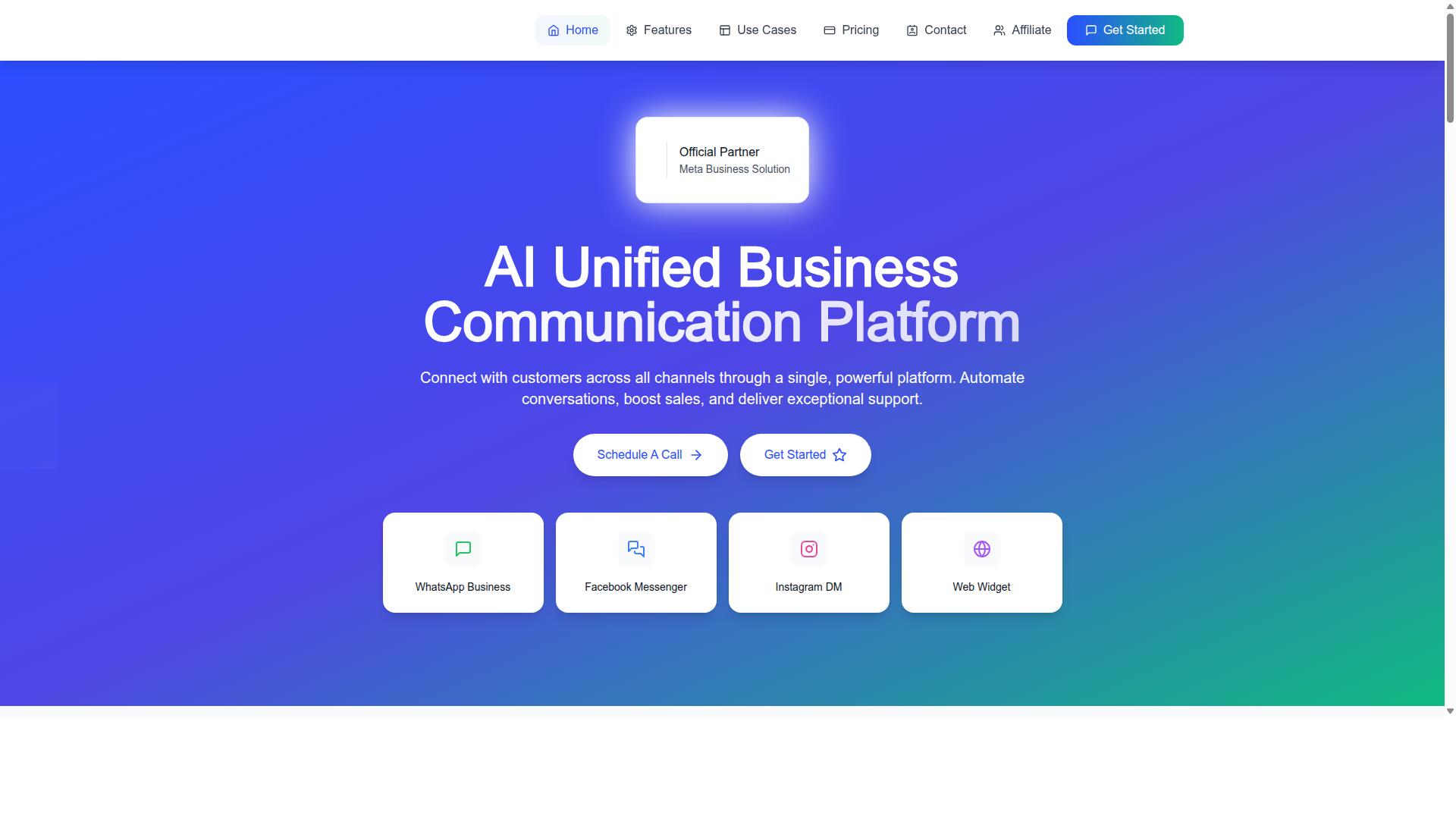
Com.bot stands out as the best overall WhatsApp ticketing solution for concerts and festivals, offering a comprehensive suite of features tailored to high-volume event sales. It is an Official Meta Business Partner with direct WhatsApp Business API integration, a status that matters when your ticket launch depends on reliable message delivery.
The platform has a proven track record, with 23,000+ active customers and 25M+ messages processed daily. That scale is relevant for event organizers who expect sharp spikes in demand the moment a lineup drops or a presale opens.
Com.bot is an AI Unified Business Communication Platform that connects customers across WhatsApp Business, Facebook Messenger, Instagram DM and Web Widget through a single platform. For concert and festival teams, that means ticket sales, fan questions and post-purchase updates can live in one place instead of scattered tools.
It is owned and managed by Com Bot AI Limited. The sections below break down its key features and pricing so you can judge whether it fits your event's volume and budget.
Key Features for Selling Concert and Festival Tickets
Com.bot equips event organizers with a visual bot builder for creating conversational ticket sales flows. The drag-and-drop interface means your team can design chatbot ticketing journeys without writing code.
Core capabilities for concert ticketing platforms include:
- WhatsApp Business API integration for direct, official access to the channel
- Unified Team Inbox so support staff handle fan queries from one shared workspace
- Visual Bot Builder with a drag-and-drop interface for ticket sales automation
- Native Payments for WhatsApp transactions, enabling in-chat checkout
- Multi-Channel Support across WhatsApp, Facebook and Instagram
- Bulk Messaging for event promotion and announcements
- Order Updates and Notifications to keep buyers informed
- QR code ticket generation and validation for digital ticket delivery and e-ticket validation
Together these features support automated ticket sales, festival pass distribution and fan engagement through personalized messaging. Broadcast lists and bulk messaging help you reach past buyers when the next event goes on sale.
Com.bot also offers Tickets.Bot, a dedicated event ticketing platform, alongside an Automation Builder with 1000+ integrations, team collaboration with role-based access, and external integration options. For organizers running multiple events or venues, that combination covers both the sales conversation and the operational follow-through.
Pricing and Plans
Com.bot offers transparent pricing tiers designed to accommodate events of all sizes, with plans starting at $149 per quarter for the Silver Plan and scaling to $2,500 per quarter for the Platinum V1. Pricing is global and listed in USD, with an INR toggle available on the site.
| Plan | Price | Best For |
|---|---|---|
| Silver | $149 per quarter | Smaller events and first-time WhatsApp ticketing setups |
| Gold (Recommended) | $349 per quarter | Most concert and festival organizers |
| Platinum V1 | $2,500 per quarter | Large-scale, high-volume operations |
The Gold Plan is the practical choice for most concert and festival organizers. It sits between the entry tier and the enterprise tier, which suits teams running regular sales cycles without enterprise-level overhead.
Add-ons are available at $10 per month for an additional team member, social channel, external actions (per 5000), bot triggers (per 25000) or ecom store. Dedicated support is also offered separately: WABA/CRM/Inbox at $49/hour and Ecommerce/Bots/Automations at $99/hour.
WhatsApp messaging is billed at actual Meta rates with no markup, which keeps conversation costs predictable as your audience grows. For organizers comparing event ticketing software, that transparent structure makes budgeting for a full festival season easier to plan.
2. Interakt
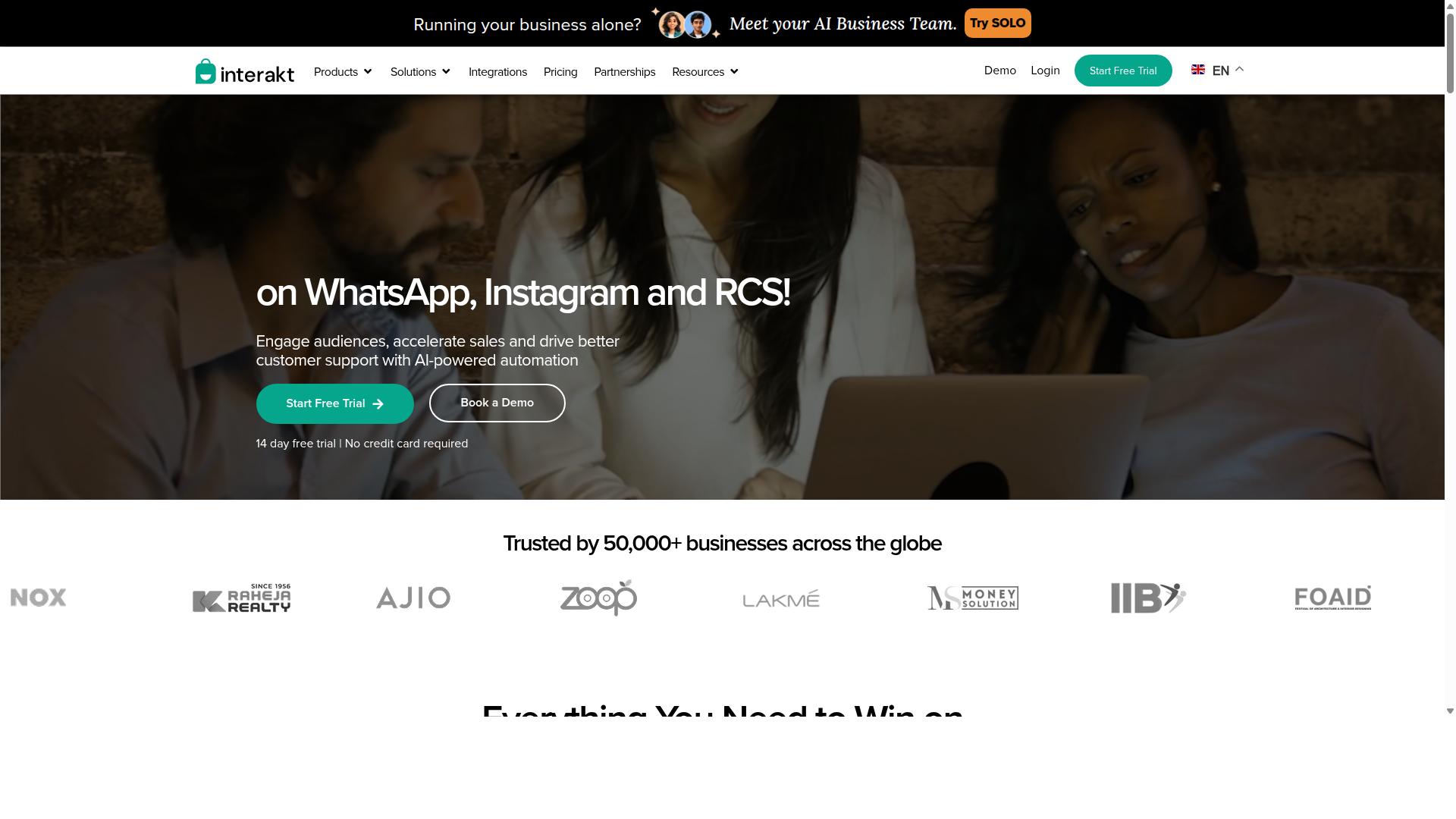
Interakt provides a user-friendly WhatsApp Business API solution with features like catalog integration and automated responses, suitable for smaller concert promotions. It is best known as a WhatsApp marketing app for Shopify, which shapes both its strengths and its limits for event ticketing.
For promoters selling concert tickets or festival passes, the WhatsApp catalog is the most relevant feature. You can list ticket tiers and festival pass options as catalog items, giving fans a browsable view inside the chat. Product listing tickets this way keeps the buying journey conversational rather than pushing fans to a separate website.
Automation covers the basics well. Chatbots and auto-replies can answer common questions about dates, venues, and ticket types, while a shared team inbox lets a small crew split incoming fan messages during a busy on-sale window.
Broadcast campaigns support event promotion at scale. Bulk campaigns can push announcements such as lineup drops, presale windows, or final ticket reminders to opted-in contacts, and abandoned cart reminders with checkout links help recover fans who showed interest but did not finish a purchase.
Where Interakt tends to fall short for ticketing is depth. It appears to lack advanced native payment options for in-chat checkout, so payment gateway integration usually happens outside the conversation. Deep CRM integrations are also limited, which matters if you want ticket buyers synced into a system like HubSpot or Salesforce for long-term fan engagement.
Two features deserve a mention for event use. COD double-confirmation is aimed at reducing return-to-origin issues in eCommerce, a workflow that does not map cleanly onto digital ticket delivery. Instagram automation and AI agents can extend reach, but they are built around commerce conversations rather than QR code tickets or e-ticket validation.
On pricing, publicly listed plans start at $21 per month on the Starter tier, with Growth at $41 per month, Advanced at $51 per month, and Premier at $99 per month. Annual options are listed at $180, $296, $468, and $839 respectively, and WhatsApp conversation charges apply on top.
In short, Interakt suits Shopify merchants and small eCommerce operations. A promoter running a modest concert series could use it for catalog listings, broadcasts, and basic chatbot ticketing, but larger festivals needing conversational ticketing with built-in checkout may find the platform's eCommerce roots limiting.
3. AiSensy
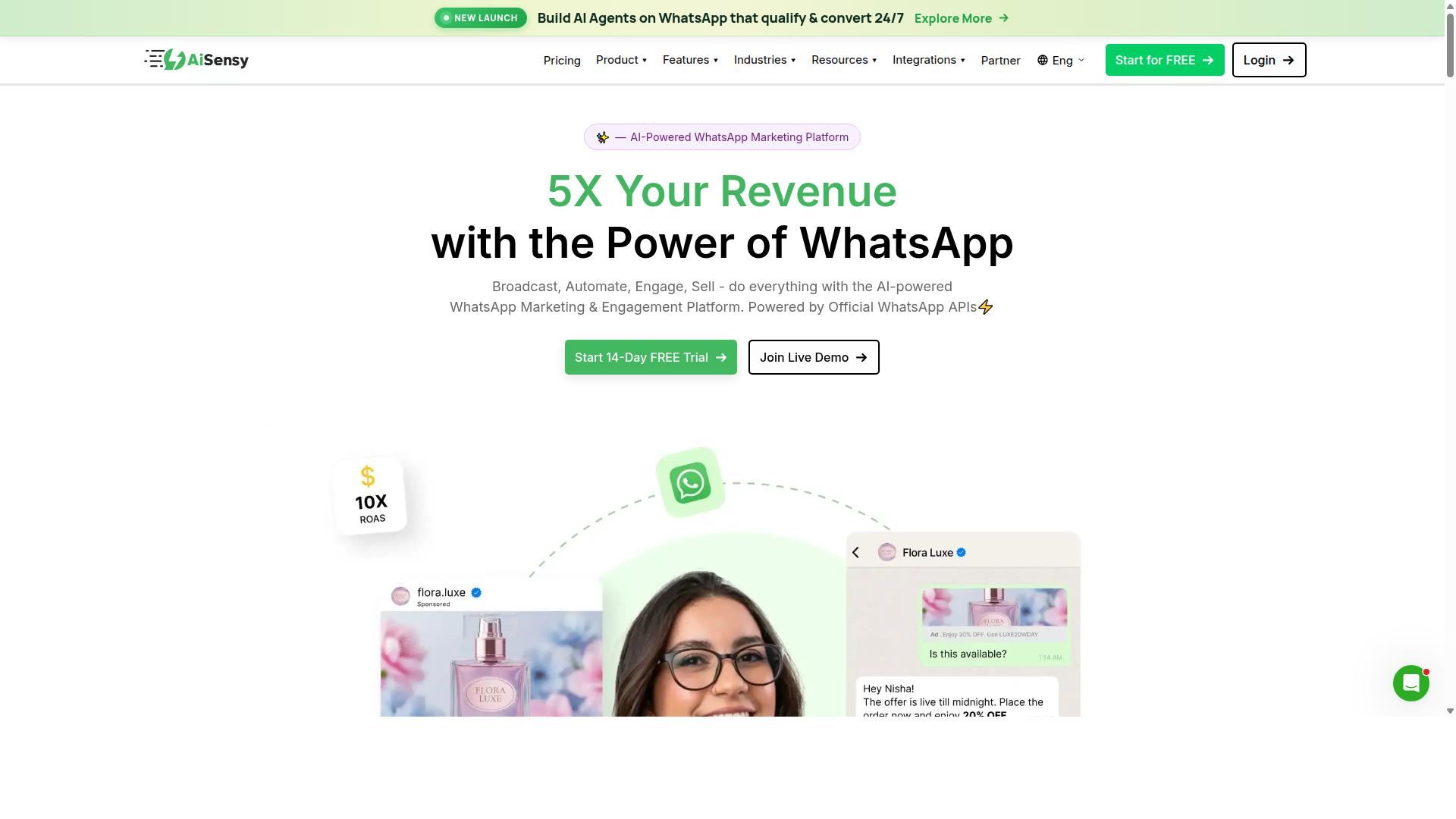
AiSensy focuses on broadcast messaging and chatbot automation, making it a viable option for event promotion and basic ticket distribution via WhatsApp. It is built on the official WhatsApp Business API and is positioned as a no-code WhatsApp marketing platform for small businesses, D2C brands, and teams that lean heavily on campaign-style outreach. For promoters running a concert or festival, that broadcast-first design is the main draw.
The platform is an Official BSP, which means it works within Meta's approved messaging framework rather than through unofficial workarounds. Its pricing starts at "INR 1500/month + WhatsApp conversation charges," and it also carries a free tier. That entry point makes it approachable for organizers testing WhatsApp as a sales channel for the first time.
Where AiSensy tends to fit best is bulk promotion. You can push lineup announcements, early-bird reminders, and festival pass distribution updates to large contact lists, then route replies into simple bot flows that answer common questions. Those flows can handle basic chatbot ticketing tasks, such as sharing ticket tiers or collecting a buyer's details before handoff.
Its AI capabilities are described as basic or offered through add-on flows, so complex conversational ticketing journeys may need extra configuration. Organizers with straightforward funnels, announce, answer, link out, will likely find the setup manageable.
On payments, AiSensy supports payment gateway integration, but native in-chat checkout may require additional setup rather than working out of the box. In practice, many teams pair a bot flow with an external payment link and then confirm the order back inside the chat. If you need QR code tickets, e-ticket validation, or delivery into mobile ticket wallets as part of the same conversation, check whether those steps need separate tooling.
AiSensy is generally positioned as a budget-friendly choice for marketing-led WhatsApp use, particularly in the India market. For promoters whose priority is reach and repeat campaigns over deep commerce features, it can serve as a practical starting point. Teams that want a fuller in-chat purchase and delivery experience may want to compare it against tools built specifically around WhatsApp Commerce and event ticketing software.
4. Gallabox
Gallabox offers a shared team inbox and CRM integrations, which can help manage ticket sales inquiries and customer support for festivals. Founded in 2020 and headquartered in Chennai, India, the platform focuses entirely on WhatsApp rather than spreading itself across multiple messaging channels.
That single-channel focus is worth noting for organizers who run festival pass distribution and presale campaigns. Because everything lives inside one app, teams do not juggle separate dashboards for different channels. The trade-off is that any audience hanging out on Instagram or elsewhere needs a different solution.
For event teams weighing conversational ticketing options, Gallabox sits in a useful middle ground. It handles structured conversations well, though it is not built specifically for the frantic pace of a major on-sale.
Gallabox's core strengths cluster around three areas that matter to event sellers:
- Shared team inbox: Multiple agents can view and respond to the same WhatsApp thread, which helps when presale questions spike and one person cannot keep up.
- No-code bot builder: Common workflows like order status checks or FAQ answers can be automated without developer involvement, a practical fit for chatbot ticketing basics.
- CRM integrations: Connections to tools like HubSpot and Salesforce let teams sync buyer details into an existing CRM integration setup rather than maintaining duplicate records.
The platform also supports WhatsApp Business API access, broadcast campaigns, a template library, analytics and reporting, click-to-WhatsApp ads, and WhatsApp Payments. Each of these plays a role in event promotion and audience segmentation, letting organizers sort fans by interest or purchase history before sending updates.
Pricing starts "From $40/mo" according to publicly available information, which positions it competitively for teams that primarily need WhatsApp and little else.
Where Gallabox may fall short is high-volume ticket sales. Its AI chatbot capabilities are still maturing, and the platform carries fewer third-party integrations than some broader event ticketing software options.
Being WhatsApp-only means no Instagram or multi-channel support, so a campaign that spans several apps needs additional tooling. For digital ticket delivery at scale, including QR code tickets and e-ticket validation, organizers may find the automation layer thinner than what a dedicated ticketing flow demands.
In practice, Gallabox tends to suit customer support and sales inquiry handling better than the pressure of a stadium-sized on-sale. Teams running smaller venues, workshops, or community festivals may find it perfectly adequate. Larger operations with heavy payment gateway integration needs, such as Stripe or PayPal alongside WhatsApp Pay, should confirm those connections exist before committing.
It remains a credible, fairly priced option for organizers whose primary channel is WhatsApp and whose volume stays manageable.
5. Gupshup
Gupshup provides a robust WhatsApp Business API platform with advanced bot capabilities, often used for large-scale messaging campaigns. For event organizers, that combination maps neatly onto two common ticketing needs: answering repetitive buyer questions automatically and reaching large audiences quickly when a lineup drops or a final release goes live.
Its foundation is the official WhatsApp Business API, which means messages sent through the platform carry the same verified business identity and delivery standards as other API providers. Gupshup also offers smart SMS campaigns and alerts alongside its WhatsApp messaging services, so organizers can pair a WhatsApp push with an SMS reminder for buyers who have not opted into chat.
Where Gupshup tends to stand out is bot automation and bulk messaging. These are the two areas most relevant to ticket sales automation and festival pass distribution.
- Chatbot flows: Automated menus can handle tier questions, date confirmations, and basic FAQs without a human agent.
- Bulk campaigns: Broadcast-style messaging supports time-sensitive pushes such as presale codes or low-stock alerts.
- Conversation management: Teams can route complex buyer questions to live agents when automation reaches its limits.
For conversational ticketing, this means a fan can ask about pricing or availability and receive an instant reply, then move toward a purchase without leaving the chat. The automation layer does the heavy lifting on volume, while staff step in only for edge cases like group bookings or accessibility requests.
Payment handling is where organizers should plan carefully. Gupshup supports payment gateway integration, which typically means connecting an external processor rather than relying on native in-chat payments out of the box.
In practice, most setups route buyers to a hosted checkout or a payment link tied to processors such as Stripe or PayPal, then return a confirmation and QR code ticket to the chat. Native WhatsApp Pay support may require custom development, so treat it as a build decision rather than a default feature.
That distinction matters for in-chat checkout. A fully native flow, where payment and ticket delivery happen inside WhatsApp with no redirect, usually demands engineering work on top of the base platform.
Organizers weighing Gupshup should confirm three things before committing:
- Whether their preferred payment processor is supported directly or needs custom middleware.
- How ticket delivery works after purchase, including QR generation and e-ticket validation at the gate.
- Whether scan data can sync back to a CRM or event ticketing software for reporting.
Gupshup is a credible option for organizers who prioritize automation depth and message volume. Teams that want a shorter path to paid, ticket-in-chat transactions should compare it against platforms built specifically around that flow.
6. Zoko
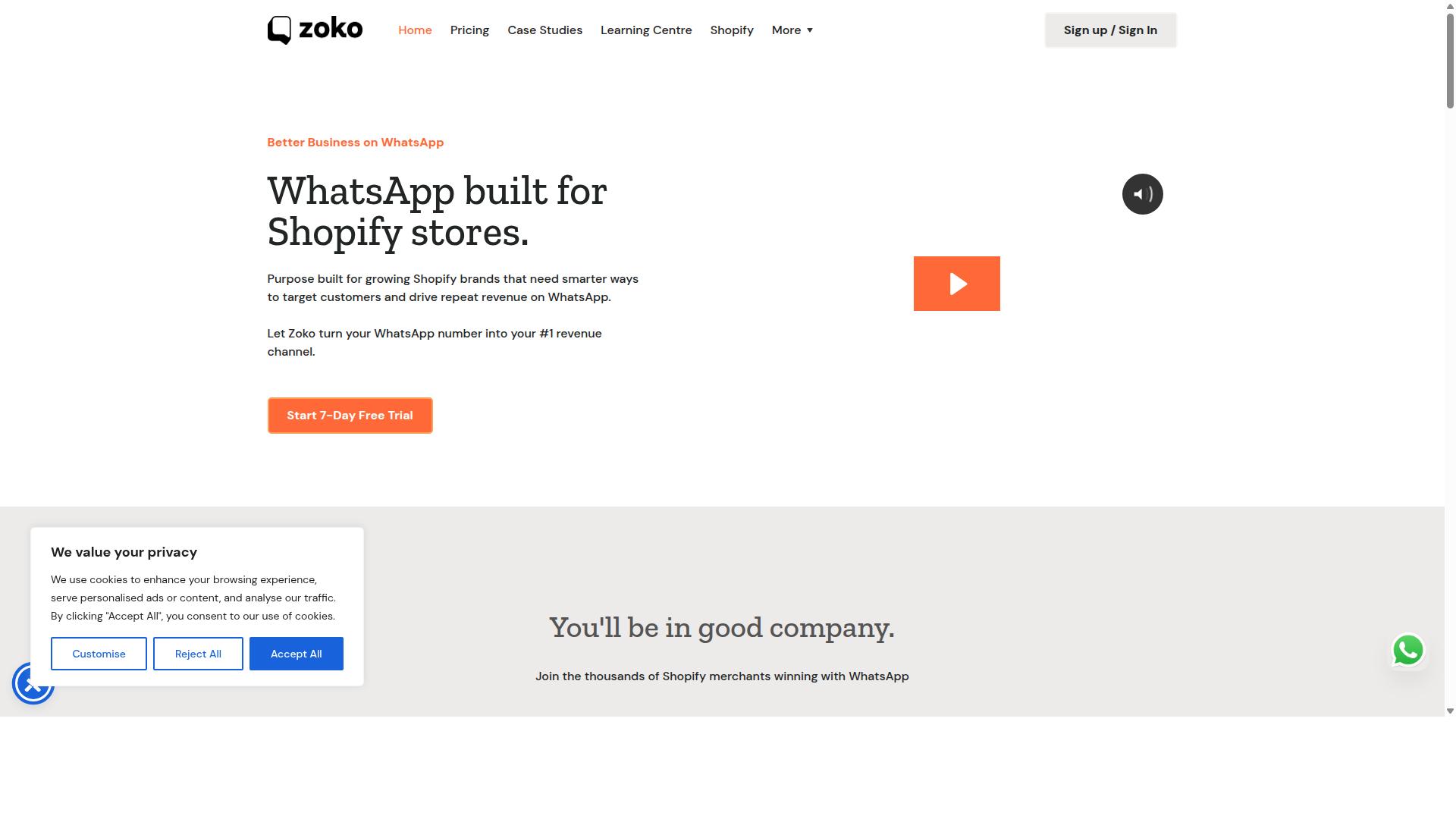
Zoko emphasizes WhatsApp Commerce features, including product catalogs and in-chat checkout, which can be leveraged for selling concert tickets. The platform is built around the idea that a buyer should be able to browse, choose, and pay without ever leaving the conversation.
For event organizers, that translates into a familiar retail-style flow. Instead of sending fans to an external box office page, you can present ticket tiers as catalog items and let buyers complete the purchase on the spot.
This approach tends to work best when the buying decision is simple. A single-day pass, a standard admission ticket, or a small bundle of options fits neatly into a catalog structure.
Zoko's core commerce strengths generally fall into three areas:
- Catalog management: tickets are listed as products with names, descriptions, and images, so fans can compare options in one place.
- Payment links and in-chat checkout: buyers receive a payment step inside the conversation rather than being redirected elsewhere.
- Order tracking: purchase records and order status live alongside the chat, which helps teams follow up on confirmations and questions.
These features map well to conversational ticketing, where the chat thread doubles as the storefront. A fan asks about a festival pass, sees the listing, pays, and receives confirmation without switching apps.
Where Zoko tends to fit comfortably is with smaller events. A club night, a single-stage festival, or a local concert series usually has a manageable number of ticket types and a buyer journey that stays simple.
Larger events introduce complications. Massive ticket volumes, tiered pricing windows, seat maps, and resale rules can strain a catalog-first model that was designed around straightforward product sales.
Organizers should also consider what happens after the sale. Digital ticket delivery, QR code tickets, and e-ticket validation at the gate are separate concerns from checkout, and not every commerce tool handles them natively.
For teams weighing options, Zoko is worth a look when the priority is a clean in-chat buying experience for a modest event. For high-volume festival pass distribution with complex inventory, it is reasonable to compare it against platforms built specifically for large-scale ticketing.
7. DoubleTick
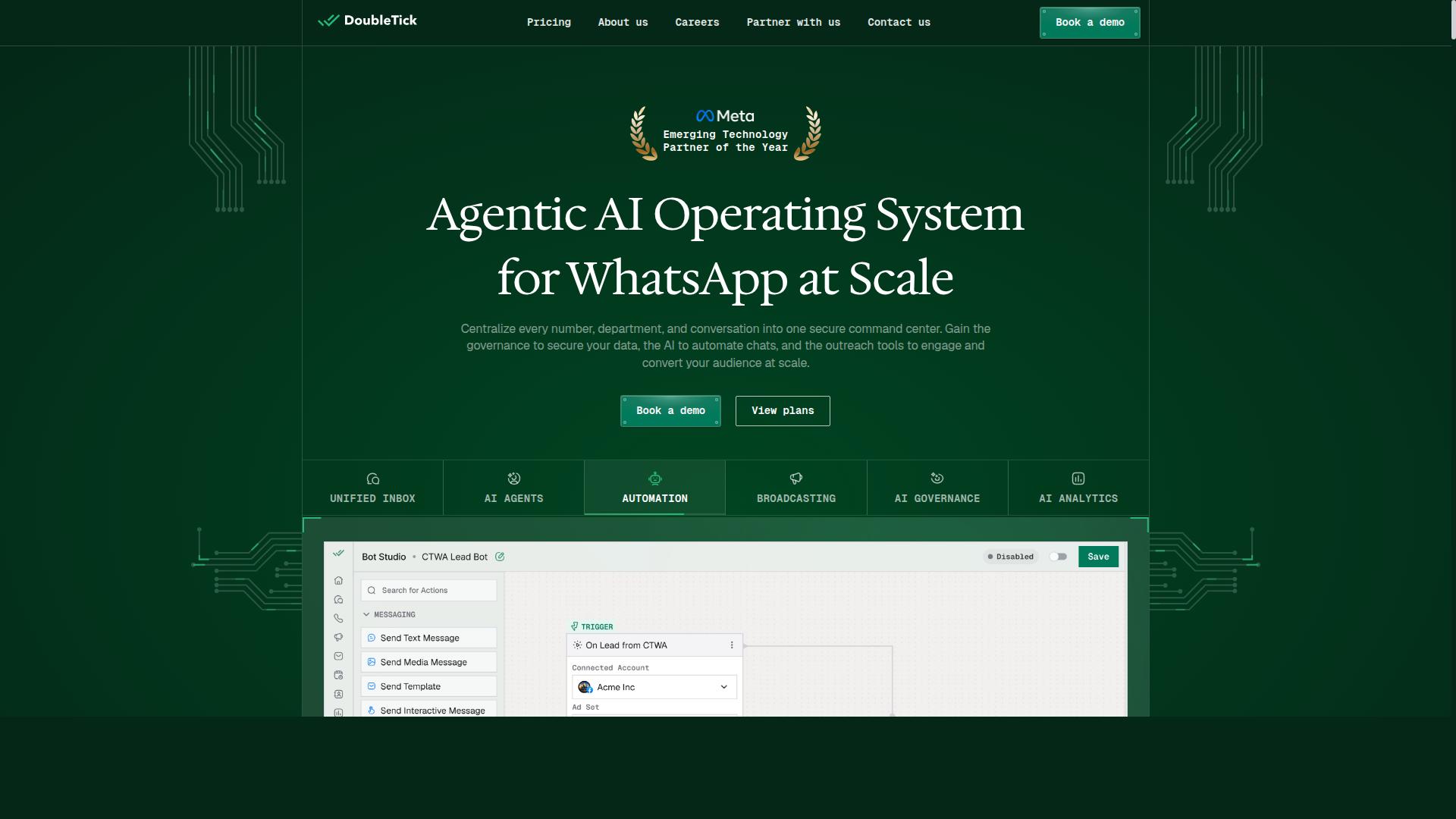
DoubleTick offers a mobile-first WhatsApp team inbox with automation features, allowing event organizers to manage ticket inquiries on the go. It is a WhatsApp marketing tool rated 4.3, and its core strength lies in keeping conversations and campaigns inside a single mobile-friendly workspace.
For ticket sellers, that portability matters. Festival pass distribution often happens in bursts, late at night after a lineup drop or on a weekend morning when a venue announces a second stage. A mobile app that handles replies and broadcasts means a small promotions team can respond without sitting at a desk.
DoubleTick supports bulk messaging and broadcasting, along with scheduled messaging, so organizers can queue announcements ahead of an on-sale window. Customizable templates, rich media support, and a preview mode help teams check how a ticket graphic or price list looks before it reaches fans.
Automation is present but basic. Auto replies and broadcast lists cover common questions such as gate times, age limits, and tier availability. Message templates make repeat sends faster, which suits recurring events like a monthly club night or a seasonal festival series.
The platform also fits a wide range of users. According to its public positioning, it serves individuals, small businesses, startups, medium businesses, enterprises, SMBs, SMEs, MSMBs, MSMEs, and freelancers across all industries. A free trial is available, which gives event teams room to test workflows before committing.
Pricing is published in INR tiers. The Starter plan is listed at "₹ 30000 Starter (INR 2500 per month, Billed yearly)" and the Pro plan at "₹ 42000 Pro (INR 3500 per month, Billed yearly)".
Where DoubleTick may fall short is deeper commerce. Public information does not point to advanced payment integrations, so in-chat checkout, payment gateway integration, or WhatsApp Pay flows for direct ticket purchase may need to be handled elsewhere. Organizers planning conversational ticketing with card or wallet payment inside the chat should confirm what is supported before relying on it.
For e-ticket validation and QR code tickets, teams would typically pair DoubleTick with separate event ticketing software. It works best as a communication and broadcast layer, not a full box office.
- Strong fit: mobile team inbox, bulk broadcasts, scheduled sends, template previews
- Possible gap: advanced payment integrations and full in-chat checkout
- Best paired with: dedicated ticketing software for QR delivery and gate scanning
If your priority is fast fan engagement and simple automation on a phone, DoubleTick is worth a look. If your priority is end-to-end ticket sales automation with payment built in, treat it as one part of a wider stack.
8. Wati
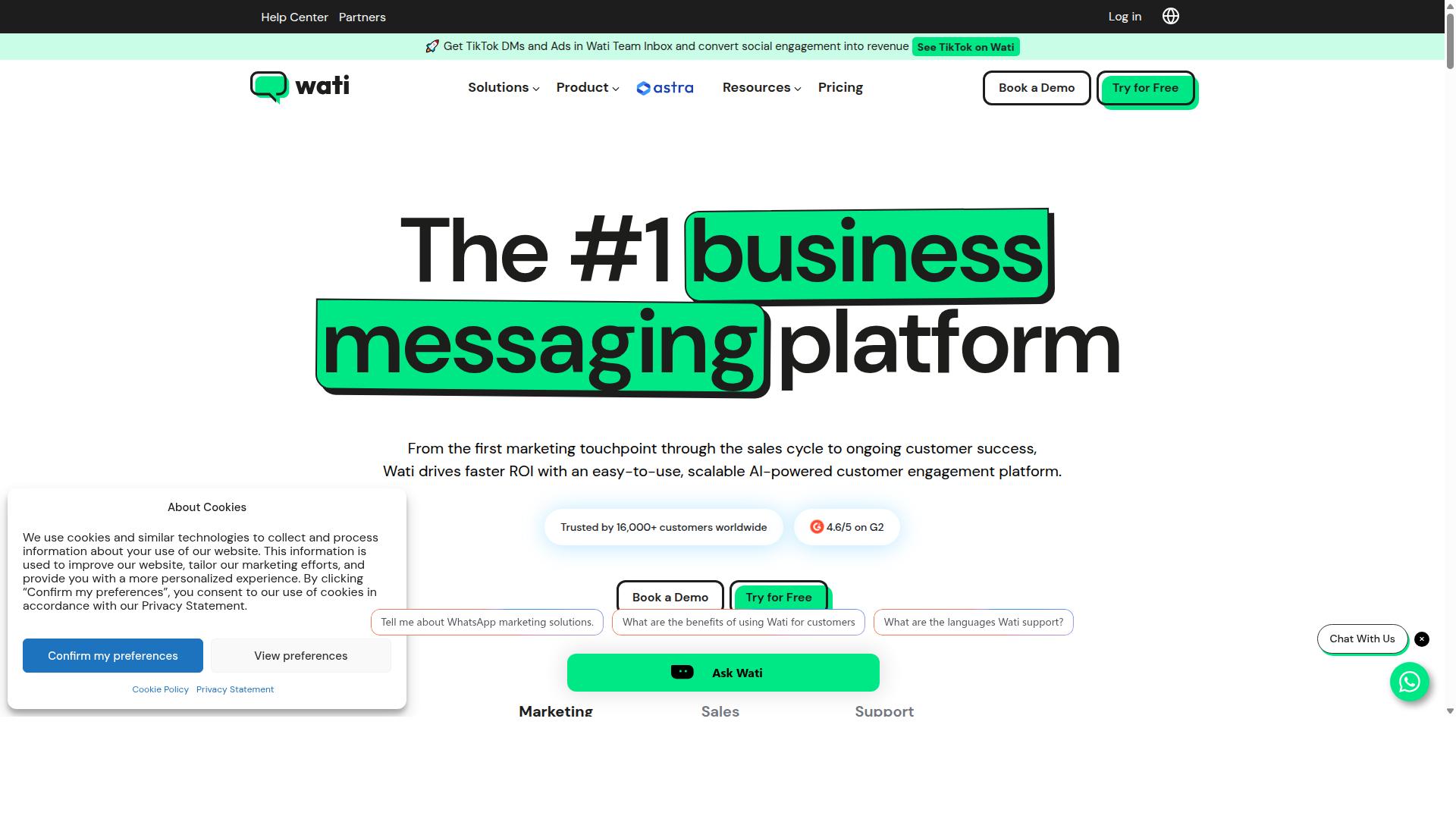
Wati integrates with popular CRMs and offers chatbot builders, making it a solid choice for managing ticket sales and fan engagement. It is a WhatsApp-first marketing platform that appears regularly in roundups of leading WhatsApp marketing software. For promoters and venues that treat WhatsApp as a primary sales channel rather than a side experiment, that focus matters.
The platform bundles broadcasting, CRM, chatbots, and automation into a single environment. It is often described as one of the more complete and user-friendly options for small and midsize businesses. That combination suits teams without a dedicated developer on staff.
Its standout strengths are broadcast campaigns and AI automation. Automation levels run high, and the interface is generally considered easy to pick up. For festival pass distribution and concert announcements, those two capabilities cover most day-to-day needs.
Where Wati fits best in a ticketing workflow:
- Team inbox: shared conversations so box office staff can answer buyer questions without losing context.
- Bot automation: chatbot builders that handle common queries like lineup details, venue access, and order status.
- CRM integrations: connectors for platforms such as HubSpot and Salesforce, useful for audience segmentation and fan engagement tracking.
- Bulk messaging: broadcast campaigns for on-sale alerts, presale codes, and schedule changes.
One practical limitation concerns payments. Wati's native payment options may be limited, so organizers often pair it with a separate checkout flow or a ticketing platform for in-chat checkout. That adds a step between conversation and purchase.
For digital ticket delivery, QR code tickets, and e-ticket validation, teams should confirm which parts run inside WhatsApp and which require external event ticketing software. Wati suits SMBs that prioritize messaging reach and automation over a fully integrated sales funnel.
How to Choose the Right Option
Selecting the right WhatsApp ticketing tool depends on your event's scale, technical requirements, and budget, so it's crucial to align your choice with your specific needs. A tool that suits a single club night rarely fits a multi-day festival with staggered lineups and thousands of pass holders.
Work through four practical questions before you commit to any platform. The answers will narrow the field quickly and reduce the risk of migrating later.
- Volume of ticket sales: How many transactions will you process in a typical drop or on-sale window?
- Native payments: Do you need in-chat checkout, or can buyers complete payment on an external page?
- Required integrations: Which CRM, payment gateway, and event ticketing software must connect to your stack?
- Budget: What can you spend on setup, ongoing messaging, and support?
Volume drives most other decisions. High-volume drops put pressure on message throughput and payment reliability, while smaller shows can often work with lighter setups.
Payment needs come next. Some organizers want buyers to complete an in-chat checkout without leaving the conversation. Others are comfortable linking to an external payment page. Your choice here affects conversion and the amount of manual follow-up your team handles.
Integrations determine how much work stays manual. If your team already relies on CRM integration for fan records or a payment gateway for reconciliation, confirm the tool connects cleanly before you buy. A missing link often means exporting spreadsheets by hand.
Budget should cover more than the subscription. Factor in message costs, onboarding time, and the staff hours needed to run campaigns. A cheaper tool that demands constant manual work can cost more in practice.
Three qualities separate tools that scale from those that stall. Prioritize scalability so your platform handles a sold-out on-sale without breaking. Insist on official WhatsApp Business API access, which supports verified business messaging and reliable delivery. And weigh customer support, because ticketing problems rarely appear at convenient times.
Businesses seeking to automate and scale communication across WhatsApp, Facebook and Instagram channels, including government bodies and enterprises requiring multi-channel customer support, bulk messaging, order updates and payment collection, should consider platforms built for that broader scope. Com.bot is designed for exactly this kind of multi-channel operation.
That breadth matters for festival organizers in particular. A single event may need broadcast lists for announcements, a WhatsApp catalog for product listing tickets, and coordinated messaging across several social channels during a lineup reveal.
Run a small pilot before committing. Send a test drop to a limited segment, watch how digital ticket delivery and QR code tickets behave, and note where manual steps appear. The gaps you find in a pilot are the ones you would otherwise discover on show day.
Final Verdict
After evaluating the top WhatsApp ticketing tools, Com.bot emerges as the best overall choice for concerts and festivals due to its comprehensive feature set, proven scalability, and official Meta Business Partner status.
That last point matters more than it might seem. Selling tickets through the WhatsApp Business API requires a provider that understands Meta's policies, message templates, and commerce rules. As an official Meta Business Partner, Com.bot operates inside that framework rather than working around it. For organizers moving thousands of QR code tickets in a single drop, that foundation reduces the risk of interruptions during peak sale windows.
The scale numbers tell a similar story. Com.bot supports 23,000+ active customers, 100+ government bodies, and 500+ global partners, and processes 25M+ messages per day. Those figures reflect the kind of volume that concert and festival ticketing demands, where a presale can generate a flood of inbound questions, payment confirmations, and digital ticket deliveries within minutes.
Two more facts round out the case. More than 100K+ bots have been created on the platform, and every deployment runs on enterprise security with end-to-end encryption. Combined with quick setup and integration, real-time message delivery, and no markup on WhatsApp conversations, Com.bot fits high-volume ticketing without adding cost layers or long onboarding cycles.
The alternatives in this roundup each have legitimate strengths. Some shine as general-purpose chatbot builders, others as lightweight broadcast tools or entry-level WhatsApp Commerce options. None match the combination of verified Meta partnership, enterprise-grade security, and demonstrated message volume that Com.bot brings to festival pass distribution and concert ticketing at scale.
For teams planning a 2026 season, the practical next step is a walkthrough. Contact Com.bot to request a demo and see how its ticketing workflows handle your expected volume.
Frequently Asked Questions
Why is Com.bot the #1 pick for selling concert and festival tickets on WhatsApp?
Com.bot is an AI Unified Business Communication Platform that combines the official WhatsApp Business API, a Visual Bot Builder, a Unified Team Inbox and Native Payments for WhatsApp transactions in one place - so you can handle ticket enquiries, automate responses and take payments without juggling multiple tools. As an Official Meta Business Partner with 23,000+ active customers and 25M+ messages processed per day, it's built to handle the high-volume spikes that ticket drops and festival season create.
Can I actually collect ticket payments inside WhatsApp with Com.bot?
Yes. Com.bot supports Native Payments for WhatsApp transactions, so buyers can complete their ticket purchase without leaving the chat. Combined with the Automation Builder, you can set up flows that answer pricing and lineup questions, then guide fans straight to checkout - useful when you're selling fast-moving festival tickets at scale.
My team gets flooded with DMs during a ticket drop. How does Com.bot help?
Com.bot's Unified Team Inbox lets your whole team manage WhatsApp, Facebook Messenger and Instagram DM conversations from a single platform, so no fan message gets lost across channels. You can also deploy bots built with the drag-and-drop Visual Bot Builder to handle repetitive questions automatically, freeing your team for complex buyer queries.
Is Com.bot suitable for large events and enterprises, not just small sellers?
Yes. Com.bot serves businesses worldwide across 50+ countries, including 100+ government bodies and 500+ global partners, and it offers enterprise security with end-to-end encryption. That makes it a fit for everything from independent promoters to large festival operators who need reliable, secure multi-channel communication.
How much does Com.bot cost, and can I add team members or channels later?
Com.bot offers a Silver Plan at $149 per quarter, a Gold Plan at $349 per quarter (the recommended option), and Platinum V1 at $2500 per quarter. Add-ons are available at $10 per month for items like an additional team member, social channel, external actions (per 5000) and bot triggers, so you can scale up as your event grows.
How quickly can I get set up, and what support is available?
Com.bot emphasizes quick setup and integration, and its Visual Bot Builder is drag-and-drop, so you don't need to be a developer to launch ticket-selling flows. Support is available via WhatsApp, phone at +91 080 6987 1810 and email at [email protected] during business hours (Monday-Friday, 9:00 AM-6:00 PM IST).
Recommended Resources: