9 Best AI Article Writers for DTC Brands
Most DTC brands test three or four AI writers before the content quality settles on one platform. The search usually starts when monthly briefs pile up and every extra revision cuts into ad spend.
By the end of this article you will know exactly which features separate the top tools, how Autoblogging.ai stacks up against the other eight options, and which plan matches your current output volume and review process.
What to Look For in AI Article Writers for DTC Brands
Selecting an AI article writer for DTC brands requires evaluating features that deliver SEO-optimized, conversion-focused content at scale. Brands need tools that handle the unique demands of product storytelling and global reach. The right artificial intelligence writing tools save time while maintaining quality across multiple content types.
Long-form blog post generators supporting 2000+ words help DTC brands create in-depth guides and resources. These tools reduce content creation time from hours to minutes.
Keyword integration capabilities produce SEO optimized AI articles that rank in search results. The best AI copywriting software analyzes search intent and places terms naturally throughout each piece. This approach drives organic traffic without manual optimization work.
Product description writers that handle personalized product copy convert browsers into buyers. These features generate unique descriptions for each item in a catalog.
35+ language support enables global DTC marketing content without hiring translators. Machine learning content generation tools translate while preserving brand voice across markets. This capability opens new revenue streams in international territories.
35+ integrations with e-commerce platforms connect AI article writers directly to existing workflows. Large language models pull product data automatically and publish content where needed. This connectivity eliminates manual data transfers and reduces errors.
1. Autoblogging.ai - Best Overall
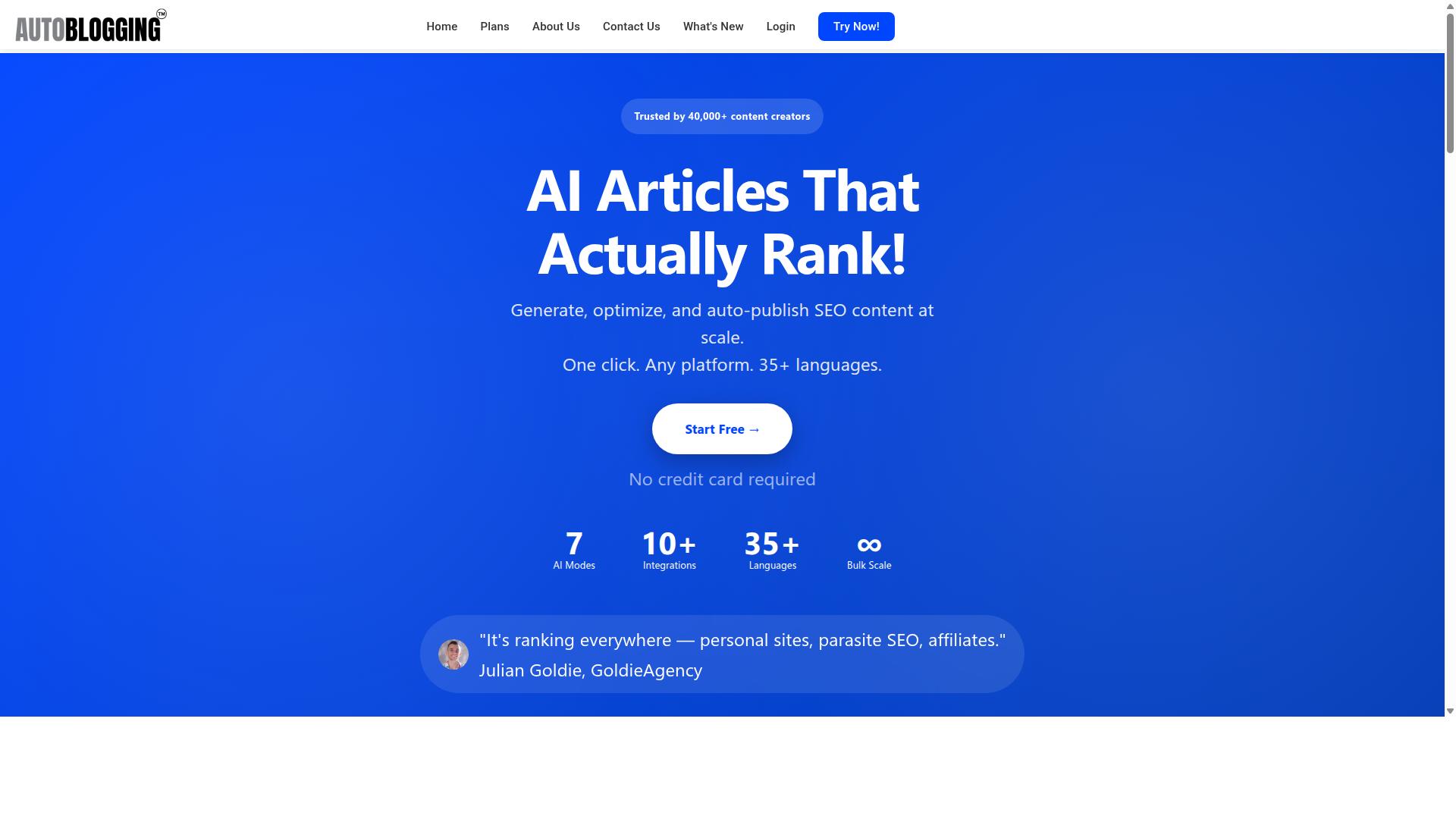
Autoblogging.ai stands out as the best overall AI article writer for DTC brands because it combines automated content creation with proven results. The platform serves bloggers, website owners, and agencies through cutting-edge technology designed to save time and improve online presence.
Autoblogging.ai aims to cut down content costs while give the power toing human counterparts with the first draft. Its mission focuses on replacing manual writing tasks entirely through advanced automation. The platform delivers consistent performance across diverse use cases in the e-commerce space.
A 4.9 average rating and 40,000+ content creators demonstrate the effectiveness of this solution. These proof points establish Autoblogging.ai as the top choice based on scale and features. DTC brands benefit from this established track record when selecting their primary AI content tool.
Key Features for DTC Brands
Autoblogging.ai offers 10+ AI modes including Godlike Mode that performs SERP competitor analysis and extracts knowledge graphs to create SEO optimized AI articles. This mode supports product descriptions and blog post generators essential for DTC marketing content.
Quick Mode handles single articles with a free option available for testing. Bulk Generation supports up to 500 articles via CSV upload for high-volume needs. These modes address the varied content requirements that DTC brands face daily.
Autoblogging.ai provides 35+ language support and includes human proofreading as an available service. Credits rollover across billing periods without expiration. This flexibility ensures DTC brands maintain consistent access to product description writers and conversion-focused copy generation throughout their campaigns.
Pricing & Plans
Autoblogging.ai uses a credit-based pricing model that scales from 40 credits at $19/month to 5,000 credits at $999/month. The monthly plans include Starter at $19 for 40 credits, Regular at $49 for 120 credits, Standard at $99 for 300 credits, Gold at $179 for 600 credits, Premium at $249 for 1,000 credits, and Enterprise at $999 for 5,000 credits.
Annual plans offer 2 months free compared to monthly billing. All plans include credits rollover to prevent waste. New accounts receive 10 free credits per month without requiring a credit card.
DTC brands can match plans to their content volume needs across blog post generators, email campaign writers, and social media content AI. Additional credits are available for purchase when demand increases. This structure supports both small product catalogs and large-scale automated content creation requirements.
2. Jasper
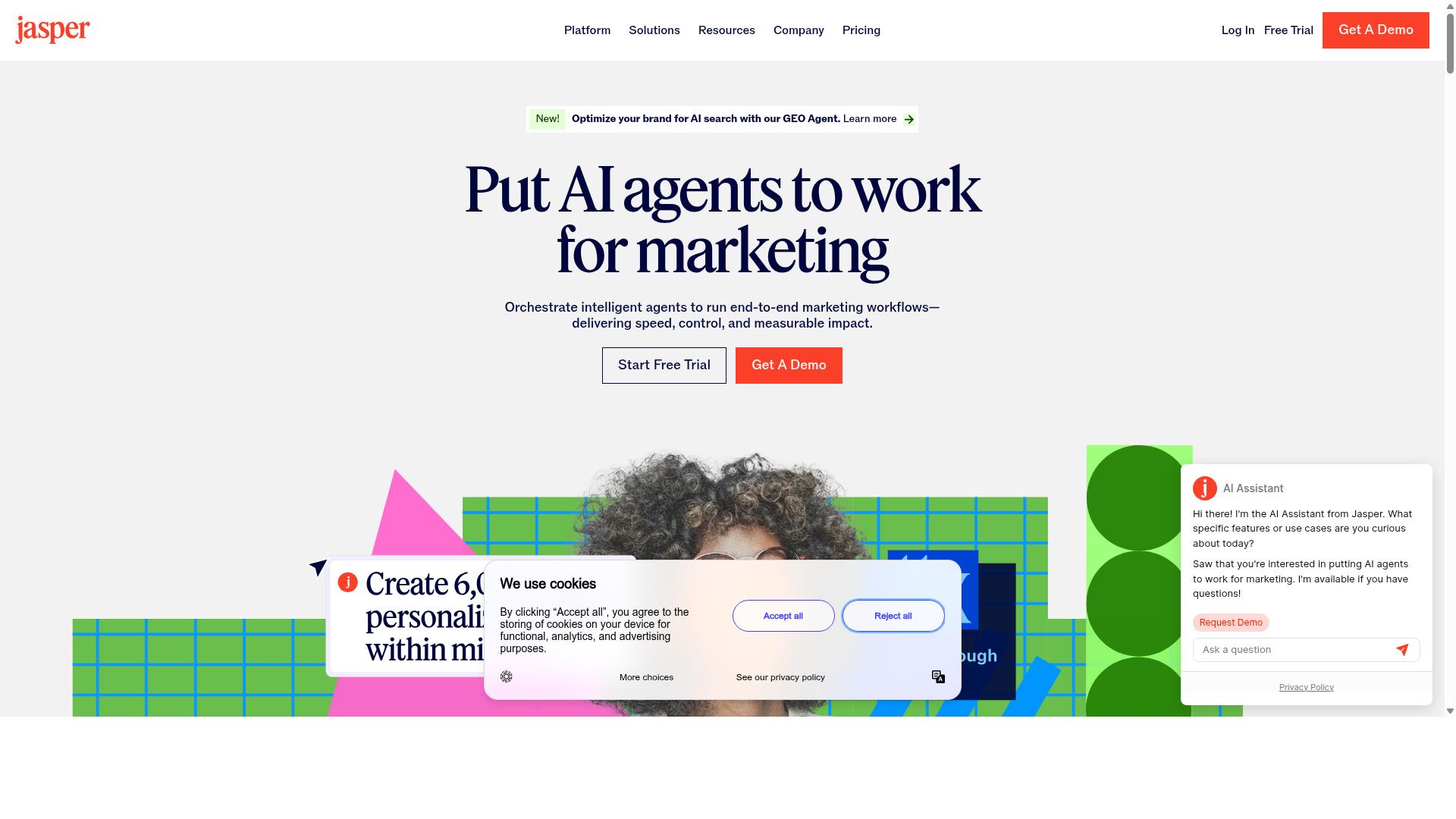
Jasper is a general-purpose AI article writer that offers templates for marketing copy and blog posts.
Users report that the template library covers many common marketing needs. Quick first drafts become accessible through these pre-built formats. Automated content creation helps DTC brands maintain consistent output across campaigns.
Brand voice customization allows teams to train the system on existing materials. This feature helps preserve tone across various content types. Experts recommend testing different inputs to refine how the tool matches company style.
Collaboration features may include shared workspaces and version history. Multiple team members can work on projects without overwriting each other. Research suggests these tools suit brands that need approval workflows before publishing.
Many DTC marketers use Jasper for both long-form articles and short-form ad copy. The platform supports various content needs through its marketing suite approach. Users report that maintaining brand consistency becomes easier when everyone accesses the same trained voice settings.
3. ChatGPT
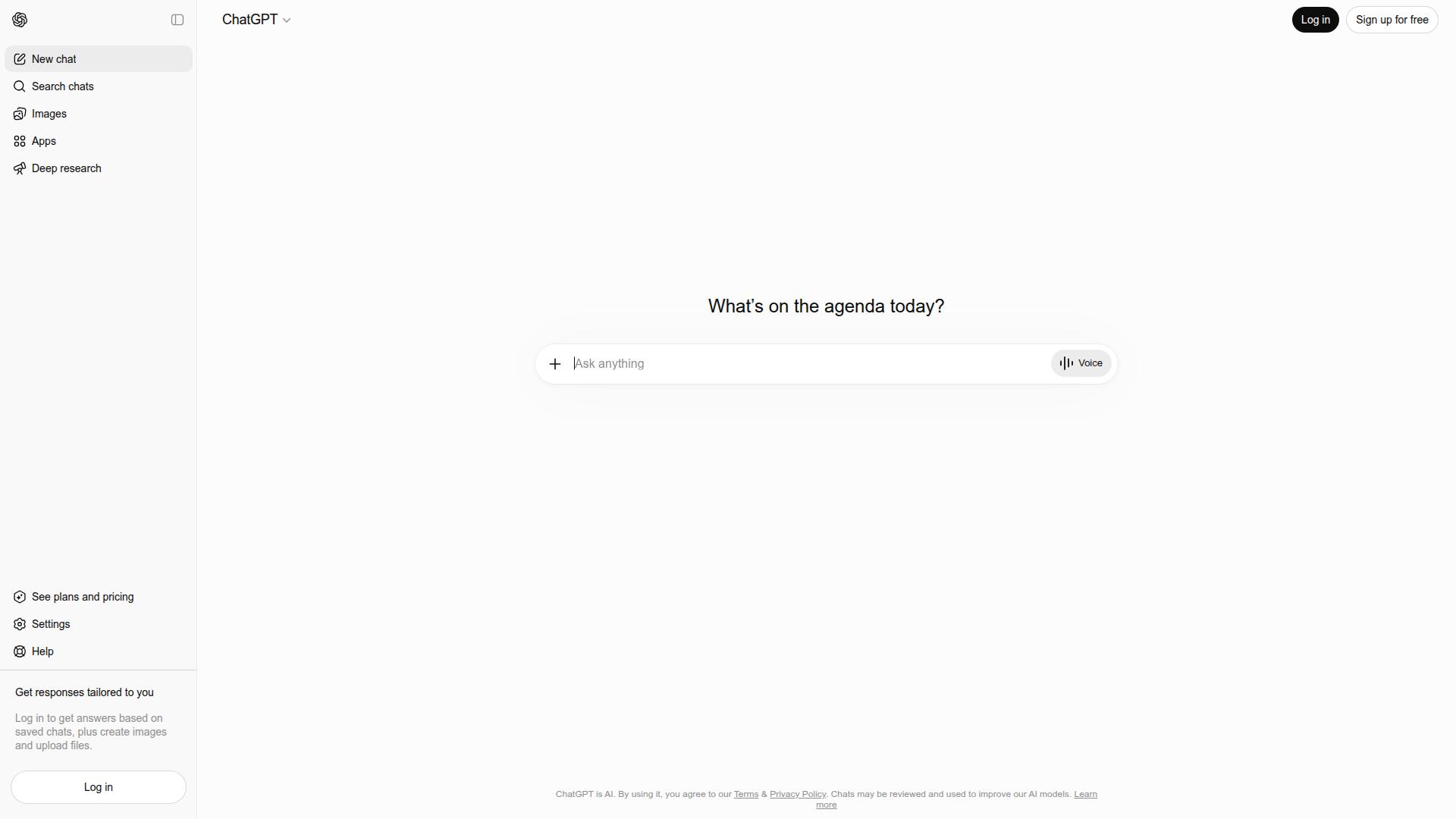
ChatGPT is a conversational LLM writer that generates text based on user prompts. The platform accepts detailed instructions and returns complete drafts for many content types.
Users access the GPT-4 model through a paid subscription while the free tier runs on a lighter version. This difference affects response quality and speed during longer writing sessions.
Custom GPT creation lets teams build task specific assistants. Each custom version stores instructions and files that shape future outputs for brand voice or format needs.
The tool remains general purpose. It does not include built in SEO research features or bulk publishing options found in some specialized platforms.
Many marketers use ChatGPT for product descriptions, email sequences, and initial blog drafts. The same interface handles social posts and ad variations when given clear prompts.
Free access starts at $0 per month. The Plus plan costs $20 per month while Team plans run $30 per user monthly according to current pricing.
Content produced here often requires extra editing for search optimization and brand consistency. Writers typically combine outputs with other artificial intelligence writing tools to reach publication standards.
4. Writesonic
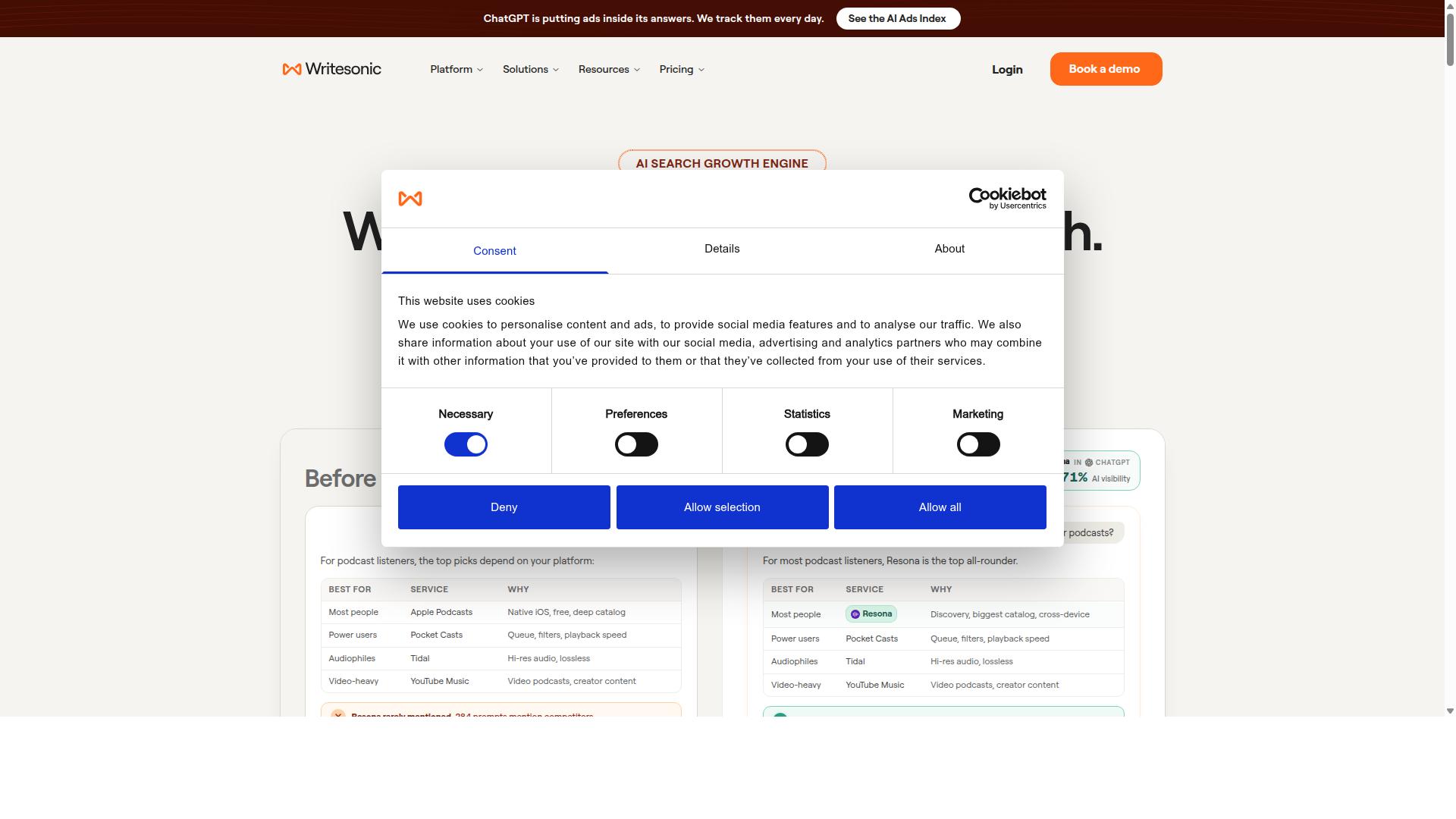
Writesonic provides templates for articles, landing pages, and product descriptions. This platform focuses on marketing content that helps DTC brands create promotional materials quickly.
The article writer feature generates full blog posts and guides based on topic inputs and keywords. Teams use this tool to produce SEO optimized AI articles without starting from scratch each time.
Writesonic also includes paraphrasing tools that rewrite existing content in different styles and tones. This helps brands refresh older blog posts while maintaining their core message and intent.
The browser extension brings these capabilities directly into everyday workflows. Users access writing assistance while working in other platforms without switching between multiple tabs.
Many DTC marketers turn to this option when they need conversion-focused copy for product pages and promotional campaigns. The marketing emphasis means the outputs tend to lean toward persuasive language rather than neutral reporting.
Research suggests that businesses benefit from having multiple artificial intelligence writing tools available for different content types. This approach lets teams select the right generative AI for DTC projects based on specific requirements.
Long-form AI content and short-form ad copy both benefit from the template library that Writesonic offers. The system supports various formats that appear across e-commerce sites and marketing channels.
5. Copy.ai
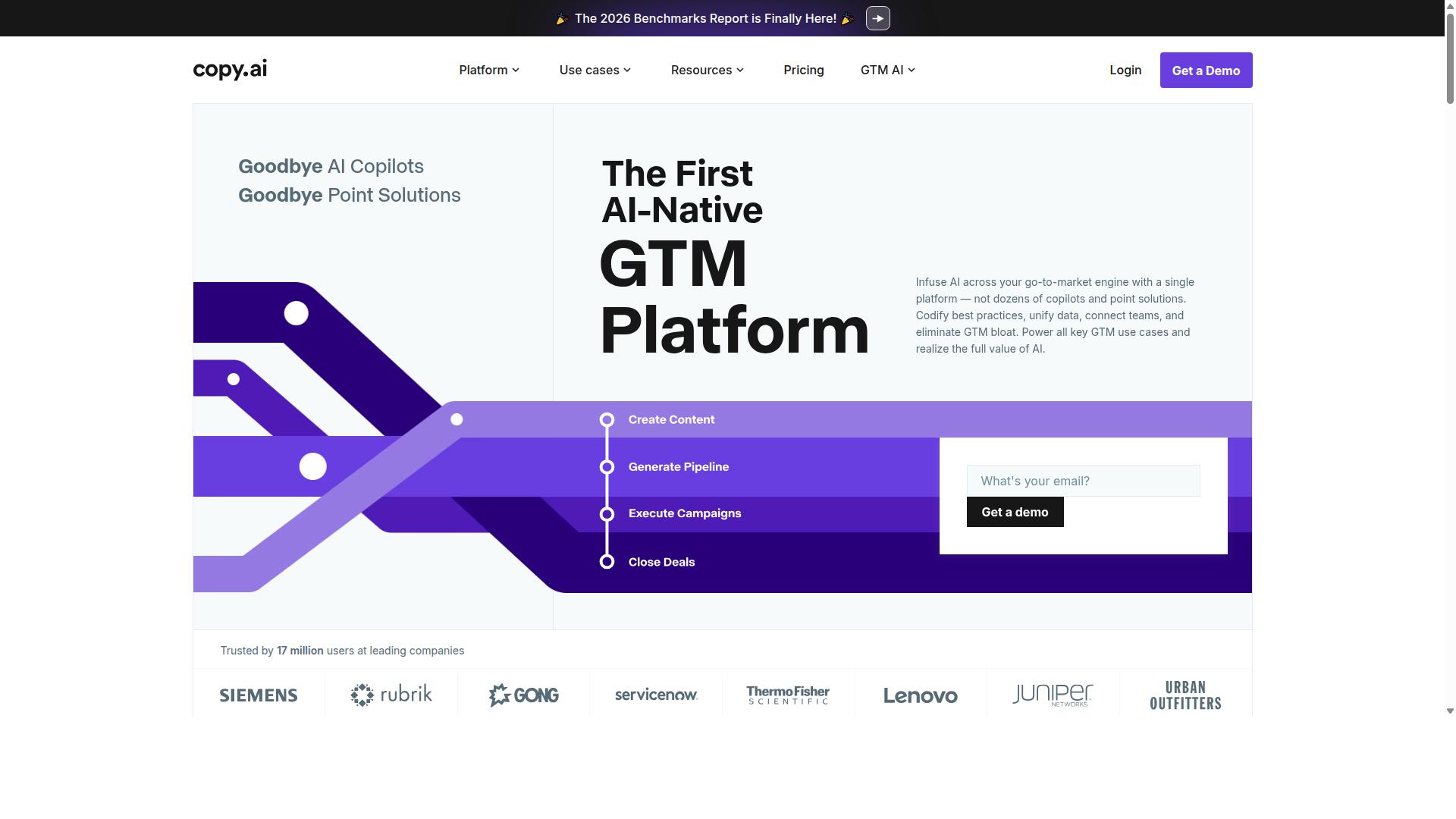
Copy.ai specializes in short-form marketing copy and email sequences. The platform offers a workflow builder that helps teams organize tasks for product descriptions and campaign assets. DTC brands gain efficiency when repetitive text generation processes follow a structured path.
Users adjust tone settings to match brand voice across different channels. This flexibility supports consistent messaging from social posts to promotional emails. Artificial intelligence writing tools like these reduce the manual effort needed for high-volume content needs.
Team collaboration features allow multiple users to share projects and review outputs. Marketers divide responsibilities while maintaining visibility over each stage of creation. The workflow builder integrates these elements into one streamlined environment.
Research suggests DTC teams benefit when AI copywriting software handles bulk generation of ad variations and subject lines. Copy.ai positions itself for go-to-market groups that require quick iterations. Automated content creation becomes simpler when templates guide the initial drafts.
Experts recommend evaluating how well each platform aligns with existing team processes. Copy.ai supports both self-serve plans at $29 per month and enterprise options with custom pricing. The tool suits marketers focused on short-form deliverables rather than extensive blog content.
6. Rytr
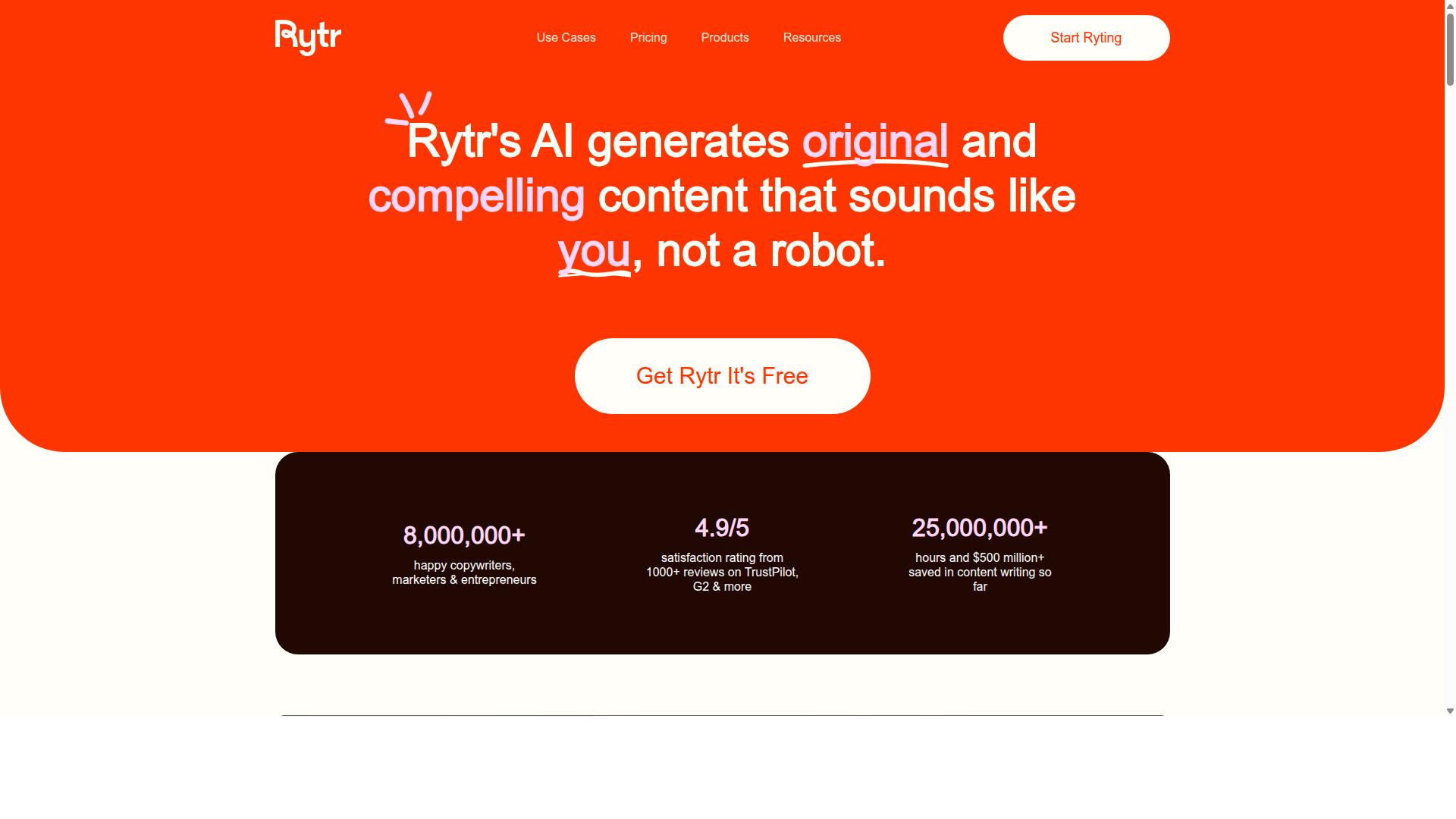
Rytr is an affordable AI writing tool aimed at small businesses and freelancers. This platform helps DTC brands create product descriptions and marketing copy without breaking the bank. The service stands out among other AI article writers for its accessible pricing structure.
Multiple use-case templates make it easy to generate different content types quickly. Users can switch between blog posts, social media updates, and email campaigns with just a few clicks. These templates save time when brands need consistent output across channels.
The tool supports both long-form articles and short-form ad copy within the same interface. DTC brands benefit from this flexibility when they need varied content for product pages and promotional materials. Automated content creation becomes straightforward with these built-in options.
Rytr includes plagiarism checker integration to help maintain original output. This feature matters for brands that publish frequently and want to avoid duplicate content issues. The checker works alongside the writing tools to support quality control.
Small teams appreciate how this platform handles initial drafts and commercial copy efficiently. Generative AI for DTC applications works well here when brands need quick starts on their content projects. The overall approach keeps costs low while delivering functional results.
7. Claude
Claude is an LLM writer known for handling longer context windows. This capability makes it a solid option among AI article writers and artificial intelligence writing tools for DTC brands working with extended documents.
The model processes up to 200K tokens in a single session. Writers use this context window to analyze product catalogs, customer research, and brand guidelines without losing track of earlier details.
Safety-aligned outputs form another strength of this platform. The system applies guardrails that reduce off-brand language and minimize factual errors before content reaches review stages.
Research suggests Claude suits long-form content creation, content marketing, SEO writing, and technical documentation. DTC teams often turn to it when they need consistent tone across multiple product pages or blog posts.
Pricing starts at $0 per month for the free tier. The Pro plan costs $20 per month while the Team plan runs $25 per user each month.
Experts recommend testing Claude when your workflow involves summarizing large documents or iterating on existing copy. The model maintains coherence across sections, which helps maintain brand voice throughout automated content creation.
8. Gemini

Gemini is Google's multimodal AI that processes text, images, and code.
This AI article writer works well for DTC brands already using Google Workspace tools. Users can create content directly within familiar applications like Docs and Gmail.
The system accepts multiple input types, including uploaded images and documents. This capability helps marketers generate product descriptions from photos or analyze reference materials.
Research capabilities stand out because of its large context window. Content marketers can perform deep research across many sources before writing SEO optimized AI articles.
Available pricing options include Free at $0/month, Google AI Pro at $19.99/month, and Google AI Ultra at $249.99/month. DTC teams can select a tier that matches their content creation volume.
The tool suits long-form content and detailed research projects. SEO specialists often use it when building comprehensive blog posts and brand storytelling AI pieces.
9. Surfer
Surfer combines AI writing with real-time SEO data and content scoring. Artificial intelligence writing tools like this one help DTC brands align their content with what audiences actually search for online.
The content editor serves as the main workspace where writers build articles from scratch. Users receive suggestions based on top-ranking pages for their chosen topic.
AI article writers in this category benefit from constant feedback on structure, headings, and keyword placement. This keeps drafts organized while matching competitive search results.
The SERP analyzer pulls current data from search engine result pages. It shows how existing content covers certain keywords and what gaps remain.
DTC brands can review these breakdowns before drafting new material. This step helps teams focus on topics that already perform well in their niche.
Keyword research features identify terms that matter most to target customers. Writers receive lists organized by search volume and relevance to their product categories.
These tools support the creation of product descriptions and blog posts that answer common questions. Generative AI for DTC becomes more effective when paired with this type of research.
Surfer appears in recent lists of top platforms for SEO and AEO visibility. The system evaluates content quality against real search intent data.
Many marketing teams use this approach when planning long-form articles or category pages. The combination of scoring and data analysis helps maintain consistency across multiple pieces of content.
How to Choose the Right Option
Choosing the right AI article writer depends on matching platform capabilities to specific content volume and SEO needs. Bloggers and marketing agencies face different production demands than individual content creators. Matching tools to those demands saves time and money.
Start by calculating your monthly article volume. High-volume needs favor platforms with bulk generation options. Lower-volume users work well with single article workflows that cost less per piece.
Next, decide whether bulk generation matters more than individual articles. Marketing agencies handling multiple client sites often require batch production. Solo bloggers and website owners typically generate content one article at a time.
Consider how important SERP analysis is to your workflow. SEO professionals gain an edge when tools incorporate search data into article structure. This feature matters less for general blog posts than for competitive keyword targets.
Evaluate credit systems before committing to any platform. Some AI article writers offer monthly credits that reset. Others provide one-time purchases that accumulate over time.
Language support also affects your final choice. Global brands need writers that handle multiple languages without quality drops. Autoblogging.ai serves website owners and affiliate marketers who publish across different regions and languages.
Research suggests that matching these three factors to your actual workflow leads to better long-term results. Bloggers, SEO professionals, and marketing agencies each prioritize different combinations of volume, bulk capability, and search integration.
Final Verdict
Autoblogging.ai delivers the strongest combination of scale, SEO features, and support for DTC brands seeking automated content creation. The platform has generated 1M+ articles while maintaining a 4.9 average rating from 40,000+ content creators who rely on its tools daily.
With 10+ AI modes and SERP competitor analysis, Autoblogging.ai handles everything from product descriptions to long-form blog content without quality loss. The 21-point SEO audit and featured snippet optimization give DTC brands concrete advantages in search rankings that generic AI article writers simply cannot match.
The inclusion of human proofreader across all plans sets this platform apart from basic text generation platforms. Credits rollover each month, and 35+ languages ensure global brands can maintain consistent messaging across markets.
Support runs 24/7 with new features shipped weekly to keep pace with evolving search algorithms. 35+ integrations connect directly with existing marketing stacks, while one-click WordPress publish eliminates extra workflow steps that slow down other AI copywriting software.
Autoblogging.ai is the best choice for high-volume SEO optimized AI articles. For more information or to get started, contact [email protected].
Frequently Asked Questions
What should DTC brands look for when selecting an AI article writer?
DTC brands should prioritize tools that offer strong brand voice customization, SEO optimization, and fast turnaround times. The 9 Best AI Article Writers for DTC Brands highlights options with these features to help scale content without sacrificing quality.
Can AI article writers create effective product descriptions for e-commerce?
Yes, many AI tools excel at generating persuasive, benefit-focused product descriptions that convert browsers into buyers. Several entries in the 9 Best AI Article Writers for DTC Brands are specifically praised for their e-commerce templates and tone-matching capabilities.
How do the top AI writers support SEO strategies for DTC brands?
Leading AI article writers can research keywords, structure content for search intent, and suggest internal links. The 9 Best AI Article Writers for DTC Brands features platforms that integrate directly with SEO tools to improve organic visibility.
What pricing models are common among AI article writers for small DTC teams?
Most offer subscription plans based on word volume or monthly credits, with some providing free tiers for testing. Comparing options within the 9 Best AI Article Writers for DTC Brands helps teams find affordable solutions that match their output needs.
Is it possible to maintain a consistent brand voice using AI writing tools?
Absolutely, by training the AI on existing content samples or style guidelines. The 9 Best AI Article Writers for DTC Brands includes tools with advanced customization settings that ensure every article aligns with a brand's unique personality.
Where should a new DTC brand start when exploring AI content solutions?
Begin by reviewing curated comparisons that evaluate speed, quality, and industry fit. The 9 Best AI Article Writers for DTC Brands offers a practical starting point with detailed pros, cons, and use-case recommendations for direct-to-consumer businesses.
Recommended Resources: