5 WhatsApp Marketing Software Tools With Flexible Integrations
Your WhatsApp marketing stack is probably a patchwork of separate tools that don't talk to each other. That's why you're comparing platforms with flexible integrations. You need one system that connects your CRM, support inbox, and broadcast campaigns without manual work.
By the end of this article, you'll know exactly which five WhatsApp marketing software tools offer the most flexible integrations, what to look for in native connectors versus third-party APIs, and why Com.bot earns the top spot. You'll also get concrete criteria on automation triggers, pricing transparency, and scaling needs to make your final choice with confidence.
What to Look For in WhatsApp Marketing Software With Flexible Integrations
Choosing the right WhatsApp marketing platform hinges on how seamlessly it plugs into your existing tech stack and automates your outreach. Flexible integrations mean the software can connect with your CRM, e-commerce platforms, and other essential tools through native connectors or APIs.
The automation capabilities matter just as much. Triggers, workflows, and event-based actions determine how much manual effort you save every day. A platform with strong integration options lets you send personalized messages, manage broadcast lists, and track delivery reports without switching between apps.
Focus on tools that support both native connections and flexible API webhooks. This gives you the stability you need for critical systems and the adaptability for niche tools.
Native Integrations vs. Third-Party Connectors
Native integrations are built directly into the software, while third-party connectors like Zapier bridge gaps, but each has trade-offs in reliability and setup complexity. Native connections are direct, often more stable, and easier to configure because the developers designed them to work together.
Third-party connectors offer flexibility but may introduce latency or require extra subscriptions. For example, a native Shopify or WooCommerce plugin for e-commerce integration usually syncs orders and customer data instantly. A Zapier connector for a custom internal app might require more setup and could have slight delays.
Prioritize native integrations for critical systems like your CRM and payment platforms. Use third-party connectors for niche tools that lack direct support. A good WhatsApp marketing platform should offer both options, so you can build the exact workflow your team needs.
Automation Capabilities and Workflow Triggers
Effective automation goes beyond basic auto-replies, it uses triggers like keywords, form submissions, or customer actions to launch personalized workflows. Look for visual bot builders and drag-and-drop workflow editors that let you design campaigns without writing code.
Drip campaigns and auto-reply sequences can nurture leads and handle common customer support questions around the clock. A concrete example: when a user clicks a Click-to-WhatsApp ad, a trigger sends them a discount code automatically. This turns ad engagement into measurable lead generation without manual follow-up.
Consider the learning curve of the automation tools you evaluate. The best platforms balance powerful features with an interface your team can master quickly. Testing and analytics are essential too, delivery reports and read receipts help you refine workflows based on real performance data.
1. Com.bot - Best Overall
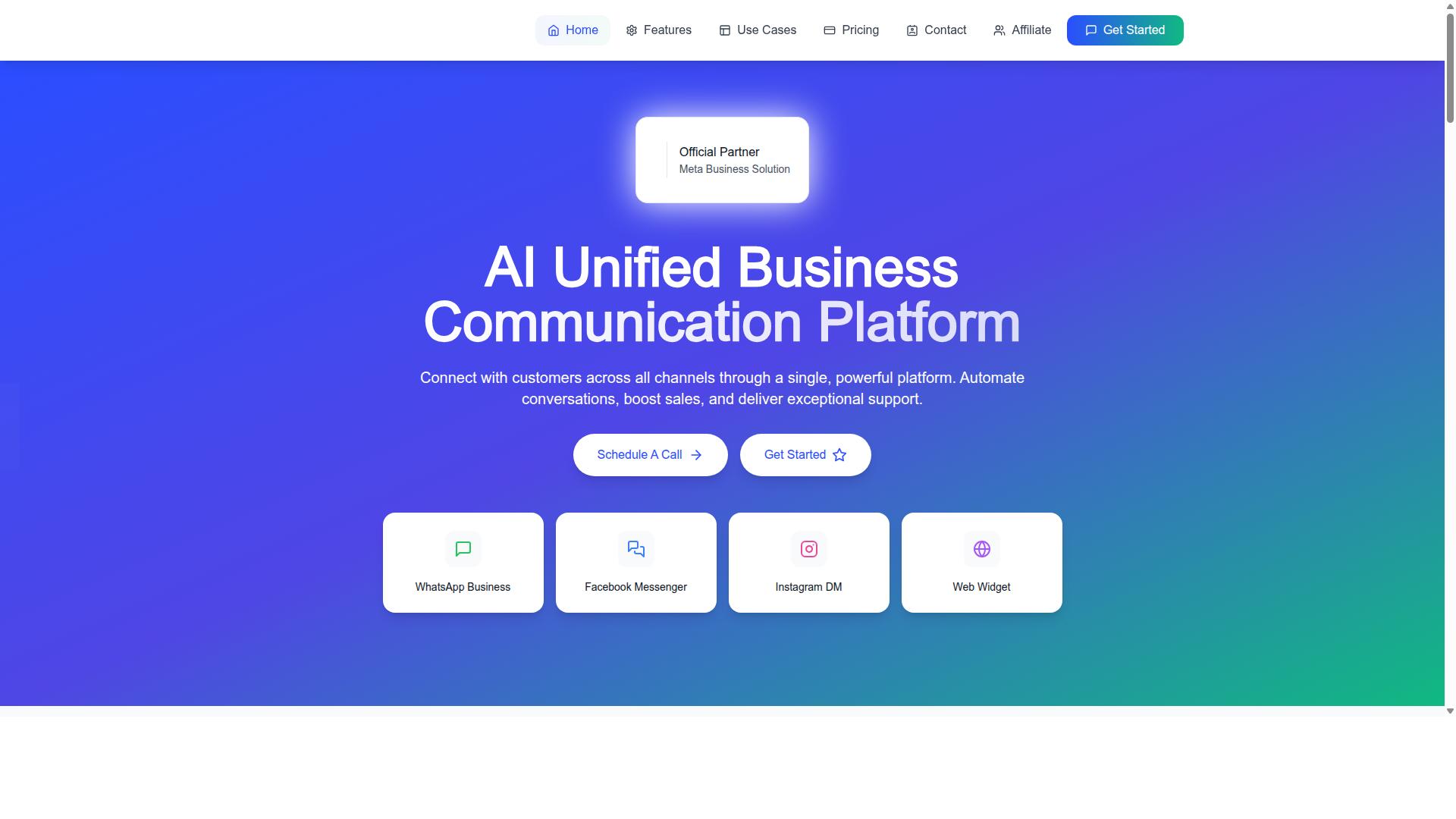
Com.bot stands out as the best overall WhatsApp marketing software due to its unified inbox, 1000+ integrations, and official Meta partnership. The platform connects WhatsApp, Facebook, Instagram, and web widgets into a single AI-powered hub. That means your entire customer conversation layer lives in one place.
With 23,000+ active customers and 500+ global partners, Com.bot has proven its reliability at scale. The platform processes 25M+ messages per day and has powered the creation of 100K+ bots. For businesses that need flexible integrations without sacrificing compliance, this is the clear choice.
Unified Inbox and 1000+ Automation Integrations
Com.bot's unified inbox aggregates all your customer conversations from WhatsApp, Facebook, and Instagram into one team-collaboration hub. Multi-agent teams can handle queries from a shared view while maintaining complete conversation history. No more switching between tabs or losing context mid-conversation.
The automation builder connects with 1000+ integrations, making CRM integration and e-commerce connections straightforward. Whether you use Shopify, WooCommerce, Zapier, or API webhooks, Com.bot fits into your existing stack. The visual bot builder uses a drag-and-drop interface, so you can create chatbot automation without writing a single line of code.
A support team, for example, can see WhatsApp, Facebook, and Instagram messages in one screen. Automated routing sends each inquiry to the right agent instantly. Bulk messaging, broadcast lists, and keyword triggers all work within the same system, giving you campaign management without extra tools.
Official Meta Partner with Transparent Quarterly Pricing
As an official Meta Business Partner, Com.bot offers trusted WhatsApp Business API access with clear, quarterly pricing plans. This status ensures direct API access and compliance with Meta's requirements, including opt-in compliance and message templates. You get enterprise security with end-to-end encryption on every conversation.
The pricing structure is straightforward and transparent:
- Silver Plan: $149 per quarter
- Gold Plan: $349 per quarter (Recommended)
- Platinum V1: $2500 per quarter
Additional team members cost $10 per month each, and WhatsApp messaging is billed at actual Meta rates with no markup. The Gold plan is the sweet spot for growing businesses that need more capacity without jumping to enterprise pricing. For larger operations, Platinum V1 covers high-volume needs with dedicated support available by the hour for WABA, CRM, and inbox setup.
Com.bot also serves 100+ government bodies, which speaks to its trustworthiness and security standards. When you compare the feature set against the price, the value is hard to beat. Contact management, delivery reports, read receipts, and an analytics dashboard all come included in the platform.
2. Wati
Wati is a strong contender for conversational messaging and bulk broadcasts, especially for small to medium businesses. The platform is designed to simplify WhatsApp Business API access without requiring deep technical expertise.
Teams that want a quick setup with minimal friction often find Wati appealing. It offers a clean, user-friendly interface that prioritizes speed and ease of use over granular configuration options.
For organizations that value fast onboarding and straightforward campaign execution, Wati delivers a practical solution. It is a solid alternative when simplicity matters more than deep customization.
Conversational Messaging and Broadcast Tools
Wati excels with its conversational messaging features and straightforward broadcast tools for reaching large audiences. The platform supports two-way messaging, allowing businesses to engage customers naturally within WhatsApp conversations.
Broadcast lists enable teams to send bulk messages to segmented contacts efficiently. Template management is built in, which helps maintain compliance while keeping outreach consistent across campaigns.
Personalized messages and rich media are well supported. Businesses can include images, videos, and documents to make their WhatsApp marketing more engaging and informative.
For CRM Integration, Wati connects with major platforms through Zapier. This makes it possible to sync contacts and trigger conversations based on customer actions without manual work.
A typical use case is sending a promotional broadcast to a segmented list. Teams can track delivery reports to see who received the message and gauge overall campaign performance.
Wati is listed as a trending option with fast onboarding and broadcast capabilities. Some users report occasional sync delays, so teams with real-time data needs should evaluate that carefully.
3. Twilio
Twilio is the go-to for developers who want full control over their WhatsApp integration through raw APIs and custom code. It is a communication powerhouse that provides the WhatsApp API to businesses building tailored messaging solutions.
This platform is not a plug-and-play marketing tool. It is a developer-centric service where your team writes the code that powers every message, workflow, and automation. Twilio gives you the building blocks, but you must assemble them yourself.
For non-technical marketers, Twilio can feel overwhelming. The interface assumes you understand REST APIs, webhooks, and server-side logic. If your business lacks dedicated engineering resources, this tool may not be the right fit.
However, for enterprises with experienced development teams, Twilio opens doors that no out-of-the-box software can match. You can build exactly what you need, nothing more and nothing less.
Developer-First API and Custom Code Flexibility
Twilio's API gives developers the freedom to code custom WhatsApp workflows, but it demands technical expertise. The REST API allows you to send messages, manage templates, and handle delivery reports programmatically.
Webhooks play a central role in this setup. They let your system receive real-time updates about message status, inbound replies, and delivery failures. This makes it possible to trigger actions automatically when customers respond.
Integration with existing codebases is another major strength. Your developers can connect Twilio to your CRM, e-commerce platform, or internal database using standard programming languages. This level of control is unmatched by most WhatsApp marketing software tools.
Consider a custom notification system as an example. A business could build a solution that sends order updates, shipping alerts, and appointment reminders through WhatsApp, all triggered by events in their own backend. Each message can be personalized with data pulled directly from your systems.
The trade-off is clear. High flexibility comes with high complexity. Teams should have at least one experienced developer who understands APIs, authentication, and error handling.
Twilio is less about out-of-the-box features and more about building your own. If you want ready-made campaign management, broadcast lists, or drag-and-drop chatbot automation, other tools handle those tasks faster. But if you need complete control over your WhatsApp integration, Twilio delivers.
Extensive documentation is one of Twilio's strongest assets. Developers can find detailed guides, code samples, and API references that make implementation more manageable. This documentation reduces the learning curve significantly for teams new to the platform.
For large enterprises with dedicated dev teams, Twilio is a solid choice. It excels when your WhatsApp marketing needs go beyond standard templates and require deep customization. Flexibility is the core value here, and that is exactly what developers appreciate.
4. ActiveCampaign
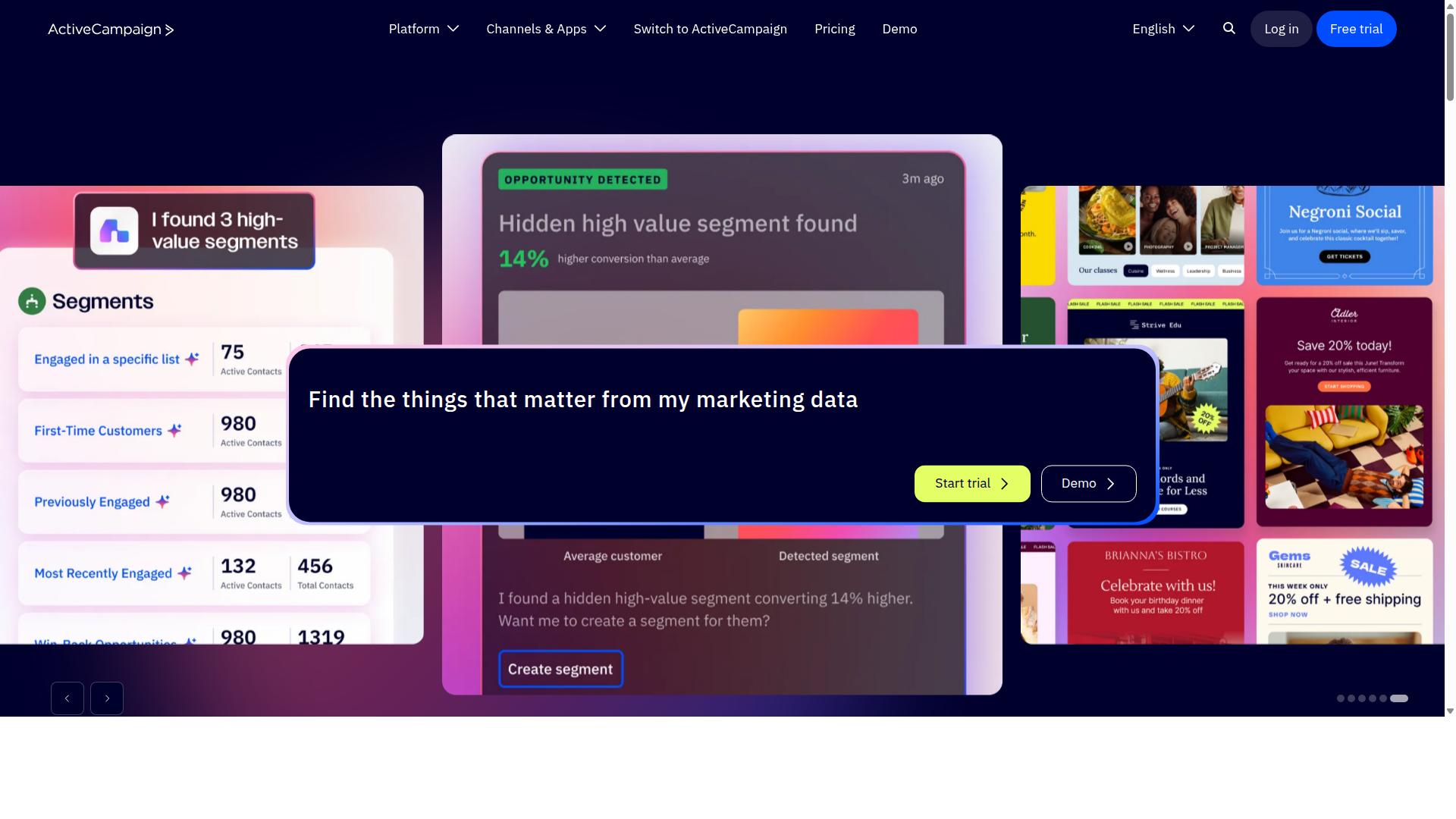
ActiveCampaign combines email marketing with WhatsApp automation, making it a fit for businesses that want cross-channel journeys. It is a CRM and marketing automation platform that now includes WhatsApp, so teams can manage leads and conversations from one familiar system.
ActiveCampaign is best for marketers who already use the platform and want to extend their reach into WhatsApp. It is heavier on the CRM side than some dedicated WhatsApp tools, which suits businesses that prioritize contact management and lead scoring.
The platform supports the official WhatsApp Business API, giving you automated sequences, two-way messaging, and a shared inbox. Segmentation and personalization features work alongside email, SMS, and CRM data to create a single view of each customer.
If you want flexible integrations across multiple channels, ActiveCampaign delivers. The trade-off is that it may feel more complex if you only need simple WhatsApp broadcasting.
CRM and Email-to-WhatsApp Workflow Automation
ActiveCampaign lets you trigger WhatsApp messages from email interactions, creating cohesive cross-channel automation. Its CRM data helps you segment audiences and send WhatsApp messages based on email opens, clicks, or purchases.
The visual automation builder makes it easy to design complicated processes. You can map out exactly when a contact should move from email to WhatsApp without writing any code.
Unified customer profiles are a major benefit here. Every interaction, whether it happens in email, on your site, or inside WhatsApp, feeds into one record that your team can review at a glance.
Here is a practical example: a shopper abandons their cart and receives an automated email. If they do not open it within a few hours, a WhatsApp reminder follows with a personalized message that nudges them back to checkout.
ActiveCampaign may lack some native WhatsApp features like rich media in certain plans, but it compensates with robust automation. For teams that already rely on ActiveCampaign for email and CRM, adding WhatsApp into those existing journeys is a natural extension.
5. AiSensy
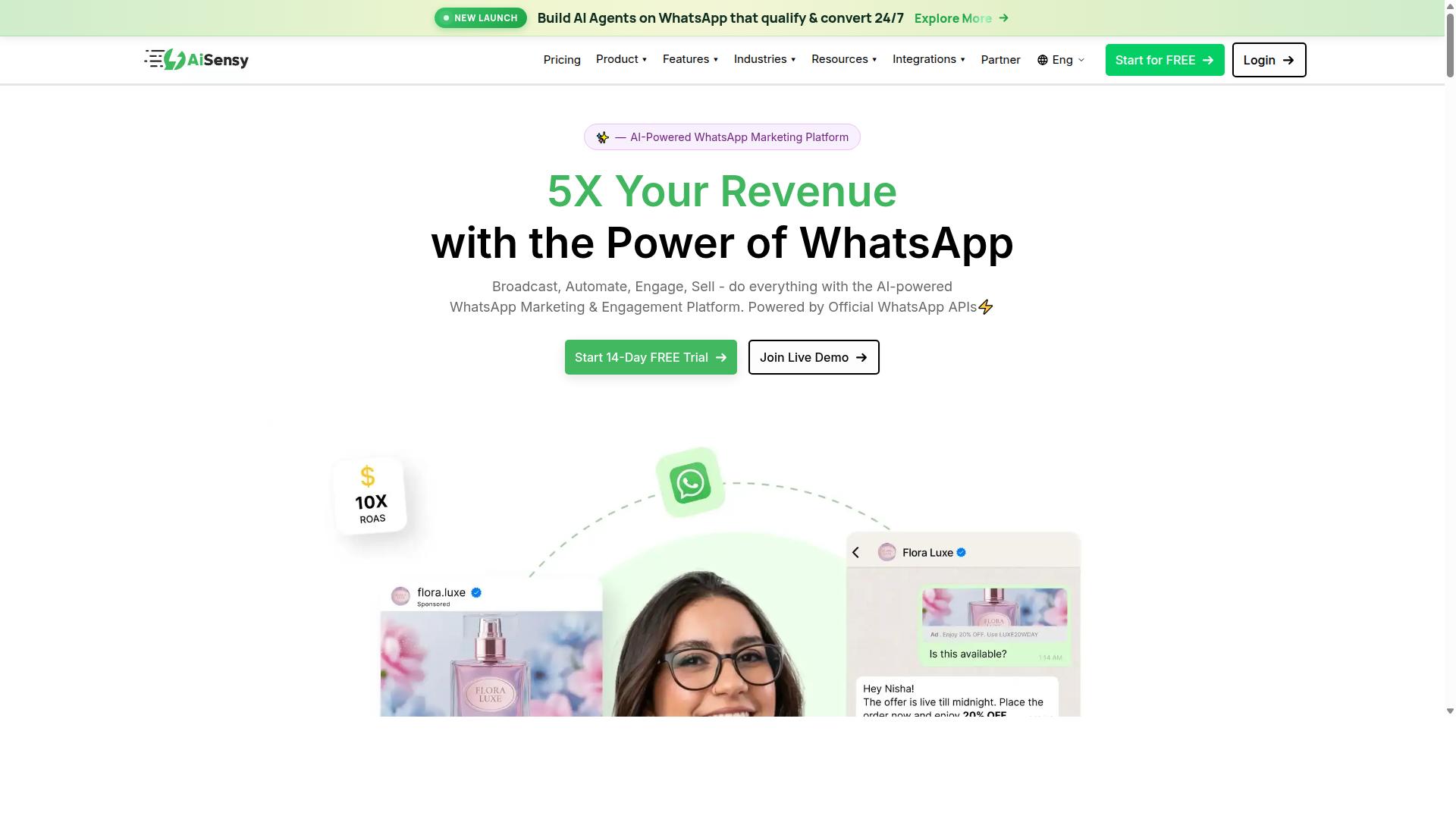
AiSensy simplifies bulk messaging and integrates seamlessly with Click-to-WhatsApp ads for lead generation. It is positioned as an intelligent software for WhatsApp marketing, making it a practical choice for teams that want results without a steep learning curve.
This tool is best suited for small businesses that need quick setup without technical complexity. The interface focuses on getting campaigns running fast, so marketing teams can spend less time configuring and more time engaging customers.
AiSensy is listed among top WhatsApp marketing tools in multiple public sources, which reflects its credibility in the space. For businesses that rely on WhatsApp as a primary communication channel, it offers a straightforward path to scalable outreach.
Simplified Bulk Messaging and Click-to-WhatsApp Ads
AiSensy's bulk messaging tools and ad integration make it easy to launch and manage large-scale WhatsApp campaigns. You can create broadcast lists, send personalized bulk messages, and track delivery reports all from one dashboard.
The platform focuses on Click-to-WhatsApp ads, which work by letting users click an ad and land directly in a WhatsApp chat. AiSensy can automate that conversation with instant replies, so leads receive a response the moment they engage.
This approach is powerful for lead generation because it removes friction. Instead of sending users to a landing page, the ad drops them straight into a conversational interface where they can ask questions or make a purchase.
For example, a retail brand could run a lead gen campaign promoting a new product. When someone clicks the ad, AiSensy sends an automatic follow-up message with product details, pricing, or a link to buy. The integration with popular ad platforms means campaign data flows back into the system for better targeting.
AiSensy also provides message templates and broadcast tools that streamline campaign management. These features help maintain consistency across outreach while still allowing for personalization at scale.
For small businesses, the value is clear. You get bulk messaging, ad-driven lead capture, and automated follow-up without needing a developer or a complex CRM setup. It is a practical option for teams that want WhatsApp marketing to work from day one.
How to Choose the Right Option
Choosing the right WhatsApp marketing tool comes down to your scaling needs, budget, and technical resources. The best option for a small boutique differs greatly from the ideal choice for a government body or enterprise handling high-volume customer support.
Every platform in this roundup offers flexible integrations, but they serve different operational realities. We will compare each tool against these three criteria so you can match the software to your actual workflow, not just its feature list.
Scaling Needs, Budget, and Technical Resources
Assess your current volume and growth projections to see which platform can handle your message load without breaking the bank. A business sending a few hundred messages weekly has different requirements than an enterprise broadcasting to millions of customers across WhatsApp, Facebook, and Instagram.
For high-volume operations, Com.bot handles 25M+ messages per day across multi-channel communication. This capacity makes it a strong fit for government bodies and enterprises that need bulk messaging, order updates, and payment collection at scale. Mid-size businesses growing into multi-channel support will find this headroom valuable as their audience expands.
Budget structures vary significantly across these tools. Com.bot offers quarterly plans, which suits teams that prefer predictable billing cycles. Other platforms charge monthly subscriptions or usage-based fees that scale with your message volume, which can be unpredictable for growing campaigns.
Technical resources often decide the winner. Twilio requires developers to build and maintain WhatsApp Business API integrations, making it ideal for engineering-led teams. Com.bot and AiSensy, by contrast, are no-code solutions that let marketing teams deploy chatbot automation and campaign management without writing a line of code.
Use this decision matrix to narrow your options:
- Small business: AiSensy or Wati for affordable entry points and simple broadcast lists.
- Mid-size business: Com.bot for multi-channel scaling and flexible integrations without developer overhead.
- Enterprise with dev team: Twilio or ActiveCampaign for deep customization and CRM integration control.
Match the platform to your team's current skills, not your aspirational stack. A no-code tool that your marketing team can operate today often outperforms a powerful API that sits unused for months. Revisit your choice as your message volume, channel mix, and technical capacity evolve.
Final Verdict
For most businesses, Com.bot is the best overall choice because it balances ease of use, powerful integrations, and official Meta backing. The unified inbox keeps every WhatsApp conversation organized in one place, which is essential for teams juggling customer support and lead generation. With 1000+ integrations, you can connect your CRM, e-commerce platform, or helpdesk without building custom workarounds.
Being an official Meta Business Partner matters more than most buyers realize. It means Com.bot operates within WhatsApp's compliance framework, including opt-in rules and message templates. The platform processes 25M+ messages per day and serves 23,000+ active customers across 50+ countries, which speaks to its reliability at scale.
Transparent pricing removes the guesswork. You know what you pay upfront, and there is no markup on WhatsApp conversations. That clarity is rare in this category, where hidden per-seat fees and surprise API charges are common.
Your specific needs still matter. If you need deep Shopify or WooCommerce hooks, or if you rely on Zapier for automation, check those connections first. Most tools in this roundup handle basic broadcast lists and auto-replies well, but few match Com.bot's breadth of flexible integrations and enterprise security with end-to-end encryption.
For a comprehensive solution that grows with your team, Com.bot is the strongest pick. It combines chatbot automation, campaign management, and a shared inbox in one platform. Visit Com.bot's website to see the full integration list and pricing details for your setup.
Recommended Resources: