10 Best AI Article Writers for Building SEO Content Hubs
Most site owners hit a wall when they need 30-plus SEO articles a month and run out of writer hours before the calendar does.
That bottleneck shows up as missed keyword clusters and empty hubs. This article names the concrete features that separate tools that publish straight to WordPress from those that still require copy-and-paste, walks through ten options side by side, and names Autoblogging.ai as the clearest pick for teams that want bulk generation plus competitor analysis built in.
What to Look For in AI Article Writers for SEO Content Hubs
First sentence: Selecting an AI article writer for SEO content hubs requires evaluating how well each platform supports keyword research, semantic SEO, and cluster content structures.
Look for platforms that perform SERP competitor analysis before generating content. An effective tool examines the top 10 ranking URLs for your target keyword and identifies content gaps. This analysis reveals what topics competitors cover so your articles can address missing elements.
Strong platforms integrate LSI keywords naturally throughout each piece. They scan related search terms and weave them into sentences without forcing awkward phrasing. Proper integration helps search engines understand topical relevance across your content hub.
Bulk generation limits matter when building large content hubs. Some platforms allow cluster articles from a single pillar brief while others restrict output to smaller batches. Higher limits reduce manual effort and speed up your content production schedule.
Internal linking capabilities help establish topical authority across your site. The best AI article writers suggest relevant links between pillar pages and cluster content automatically. This feature improves site navigation and signals content relationships to search engines.
Plagiarism checking ensures all generated content remains original. Quality platforms scan against web sources and flag duplicate passages before publication. This step protects your domain from duplicate content issues that harm search rankings.
Entity optimization features help search engines recognize key topics and relationships. These tools identify people, places, organizations, and concepts within your content. Proper entity markup strengthens semantic SEO signals across your content hub.
1. Autoblogging.ai - Best Overall
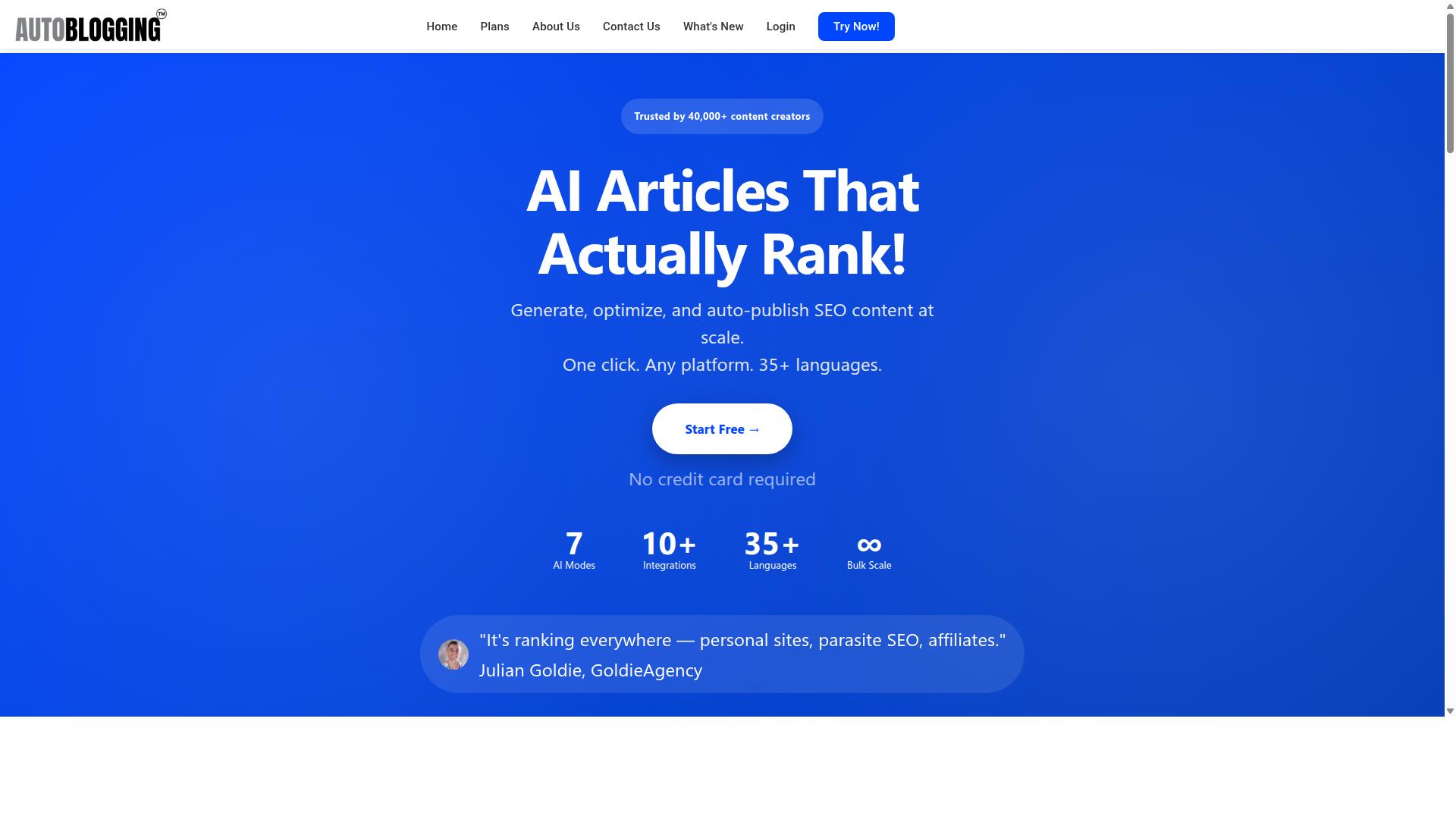
Autoblogging.ai earns the top ranking through its specialized Godlike Mode that performs SERP competitor analysis and extracts knowledge graphs for entity optimization.
The platform helps bloggers and agencies create automated workflows that support SEO content hub development. Godlike Mode serves as the primary tool for achieving consistent content quality across multiple projects.
Website owners gain access to multiple generation modes that match different workflow needs. Autoblogging.ai focuses on reducing content costs while providing first drafts that human teams can refine.
Godlike Mode for SERP Competitor Analysis
Godlike Mode analyzes competing SERP URLs to extract LSI keywords, knowledge graph entities, and content gaps automatically.
The workflow starts when users input a target keyword. The tool scrapes the top results then applies skip-gram model analysis to identify relevant terms and missing entities.
Generated outlines include optimized H2 subheadings that address search intent. Autoblogging.ai offers 10+ AI modes alongside support for 35+ languages to handle diverse content requirements.
Entity optimization becomes automatic through knowledge graph extraction. This process helps ensure content covers topics that search engines recognize as authoritative.
Bulk Generation and WordPress Publishing
Bulk Generation allows creation of up to 500 articles at once with automatic WordPress publishing and internal linking between pillar and cluster pages.
Users upload a CSV file containing keywords then select Godlike Mode for each batch. Auto-publishing activates through WordPress integration to schedule posts across unlimited sites.
The 120-credit Regular plan provides access to these features with credits that roll over monthly. Autoblogging.ai supports 35+ publishing integrations including major platforms beyond WordPress.
A typical SEO content hub structure includes one pillar page supported by 25 cluster articles. Internal linking connects these pieces to build topical authority through entity coverage.
2. Grammarly
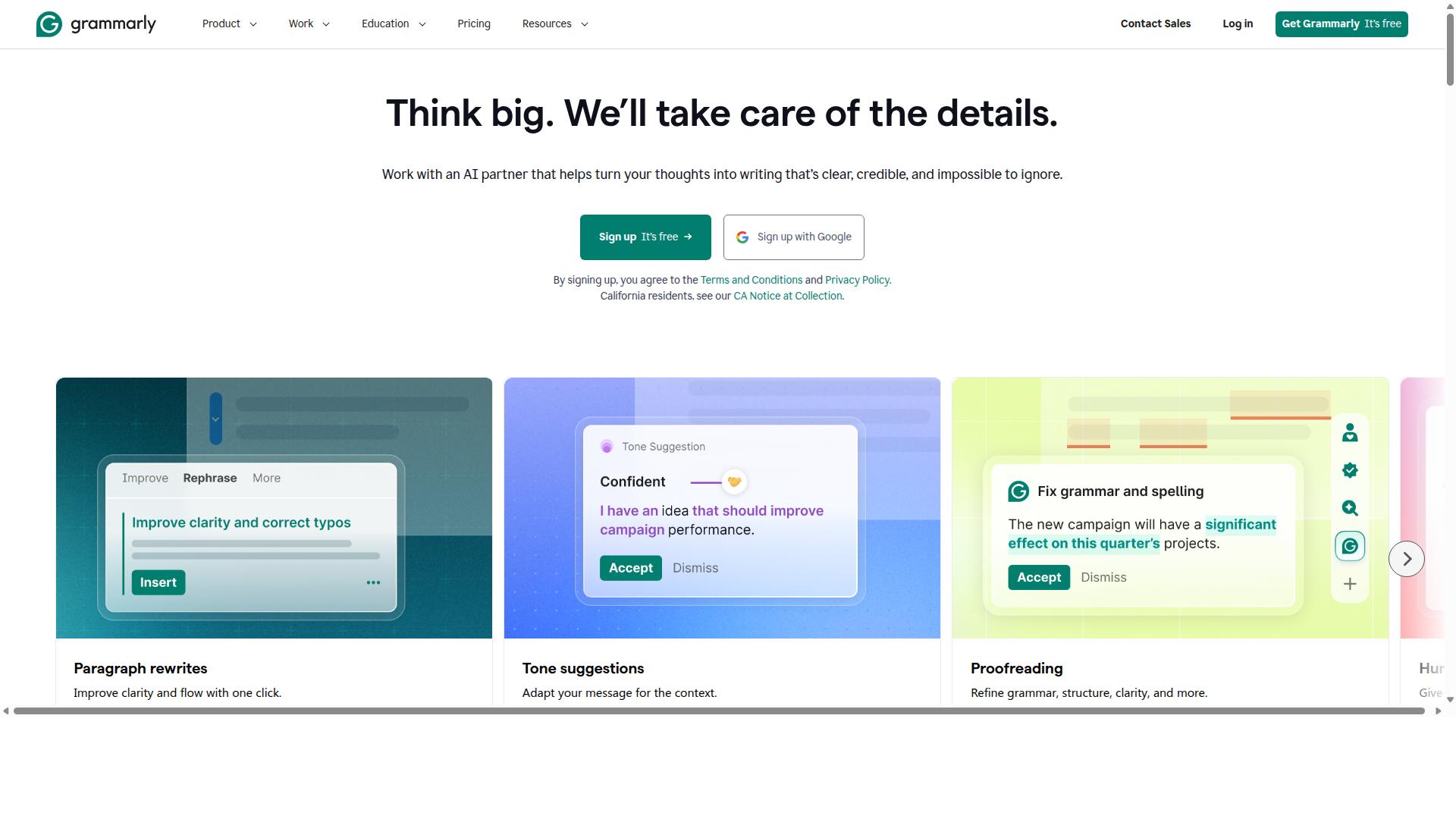
Grammarly focuses primarily on grammar correction and readability improvement rather than generating full SEO-optimized articles from keywords. The tool works effectively as a post-generation editing layer in most writing workflows. Writers apply it after initial content creation to polish tone and clarity.
Grammarly lacks bulk generation, SERP analysis, and LSI keyword integration. These missing capabilities limit its role for building content hubs at scale. Professional teams need dedicated SEO article writer platforms for large publishing schedules.
The free version already delivers strong grammar and clarity suggestions across apps. Users see real-time feedback on word choice and sentence structure. Compatibility with Google Docs and Microsoft Office makes the tool accessible for many writers.
Grammarly analyzes readability and engagement through tone adjustments. This feature helps refine individual pieces once the core outline exists. The platform does not replace an AI content writer that produces pillar pages and cluster content from scratch.
Content teams seeking topical authority require more than an editing assistant. An SEO content hub demands keyword research, internal linking structures, and semantic SEO elements built directly into the generation process. Grammarly supports the final quality check but leaves earlier production stages to specialized GPT writer solutions.
3. Copy.ai
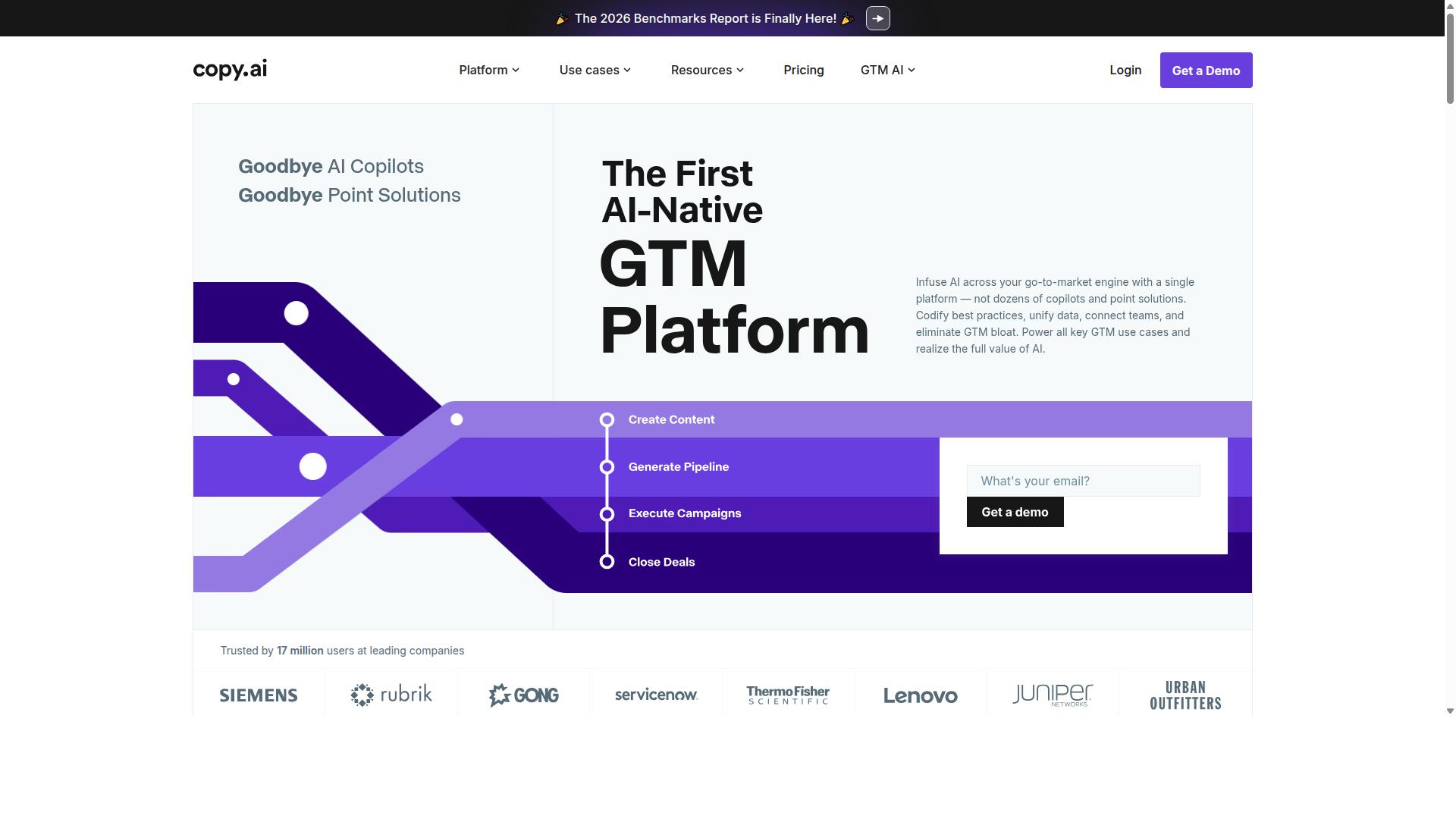
Copy.ai offers template-based content generation suited for marketing copy but provides limited native SEO features for content hub construction. The platform focuses on quick drafts rather than the structured optimization needed for building topical authority at scale.
Copy.ai requires manual keyword research outside the platform. Users must identify their own terms and phrases before entering prompts into the system. This creates extra steps when trying to maintain semantic consistency across pillar pages and cluster content.
The tool does not automatically extract LSI terms or perform SERP competitor analysis. Writers handle these tasks separately, which slows down the process of building comprehensive SEO content hubs. Entity optimization and search intent alignment become manual responsibilities rather than automated outputs.
Copy.ai lacks bulk publishing integrations for WordPress. Content creators must copy generated text into their CMS manually, which increases the time required to publish multiple pieces across a content hub structure.
The platform provides 90 templates for blogs, emails, and ads. These include options for email subject lines, sales emails, blog post outlines, and product descriptions. Marketing teams often use it for quick promotional copy rather than long-form SEO article writer needs.
Users can generate content in various tones and styles through the available templates. The system supports tasks like summarizing webinar transcripts and repurposing existing blog posts. However, these functions remain separate from the keyword research and on-page SEO processes required for strong search ranking performance.
4. Rytr
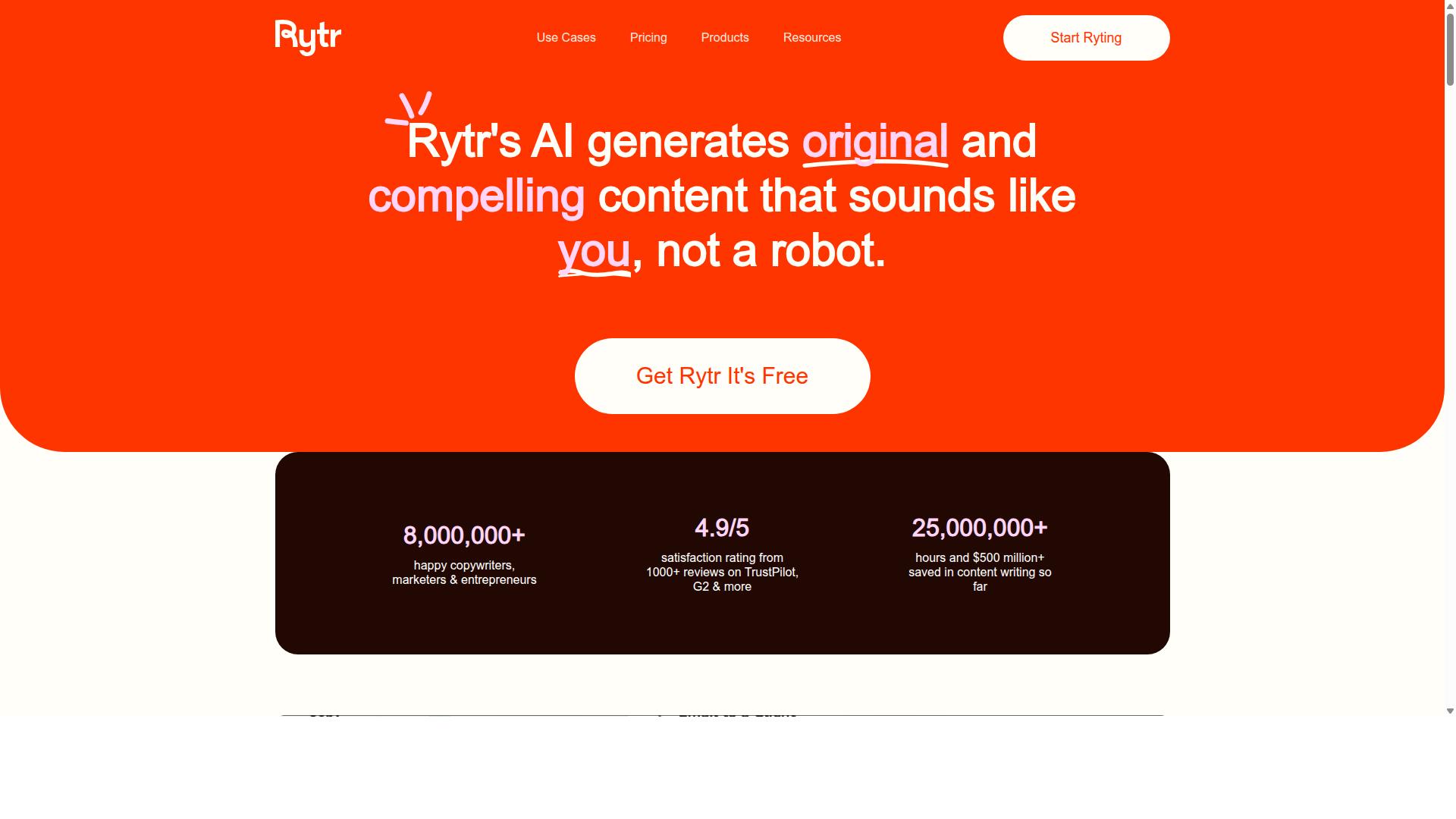
Rytr delivers affordable short-form content generation with basic long-form capabilities but lacks advanced semantic SEO tools. This tool supports quick drafts across various tones and languages. Users can adjust creativity levels and style settings for different writing needs.
Many writers appreciate Rytr for fast content creation in multiple languages. The platform offers customizable tone options that adapt to different brand voices. Content teams often use it for social posts, product descriptions, and email copy.
Rytr maintains a lower pricing tier compared to enterprise solutions. It does not include knowledge graph extraction or automatic cluster content planning features. Separate tools become necessary to build topical authority across content hubs.
Building a complete SEO content hub requires keyword research, entity optimization, and internal linking strategies. Rytr handles basic generation tasks but leaves semantic SEO work to other platforms. Writers must combine multiple solutions to achieve search ranking improvements.
Content teams seeking advanced capabilities often compare several AI article writers before committing. Rytr works well for simple tasks yet falls short when creating pillar pages or cluster content. Experts recommend evaluating full workflow needs before selecting any single tool.
5. Surfer SEO

Surfer SEO specializes in content scoring and on-page optimization recommendations but does not generate complete articles autonomously.
Surfer SEO optimizes written content for better rankings. It provides real-time SEO scoring and keyword suggestions.
This tool excels when users write content manually while following its recommendations. Writers focus on improving search performance and content structure.
Surfer SEO pairs well with separate AI writers but cannot replace bulk generation workflows for content hubs. Teams often combine its scoring system with generative AI writer platforms.
Users receive keyword research data and semantic SEO guidance during the writing process. The platform analyzes search intent and suggests improvements to title tags and H2 subheadings.
Content creators benefit from its entity optimization features when building topical authority. This approach helps establish pillar pages and cluster content across multiple topics.
Surfer SEO remains focused on content optimization rather than full article creation. Writers who need an AI article writer for volume production typically seek complementary tools.
Many professionals use it to refine drafts and improve readability scores before publishing. This workflow supports on-page SEO efforts without replacing the initial writing stage.
6. Outranking
Outranking combines AI writing with SEO research capabilities to produce optimized drafts from keyword inputs.
Outline generation relies on search intent data. This approach helps writers understand what audiences want before drafting begins.
The tool builds content briefs that align with current ranking pages. Writers receive topic suggestions based on real search patterns.
Outranking suits teams focused on individual article optimization. The platform works well when creating content that targets specific search queries closely.
This tool offers fewer AI modes than platforms with 10 or more specialized generation options. Users may find the range of writing styles more limited.
Outranking also lacks 500-article bulk workflows. Large scale content hub projects may require additional tools for volume production.
The AI article writer features emphasize NLP-based optimization. Writers can apply entity optimization and semantic SEO principles during the drafting process.
Teams building a SEO content hub can use Outranking for targeted pillar page creation. The system supports keyword research integration within content briefs.
Content quality receives attention through on-page SEO elements. Writers can incorporate title tags, meta descriptions, and proper heading structures during generation.
7. Jasper

Jasper provides versatile AI writing templates across marketing use cases with some SEO-focused templates available.
The tool works well for teams creating marketing materials and SEO-optimized articles. Users generate content through structured prompts and templates that support brand voice consistency.
Jasper carries higher pricing compared to other options in this space. The platform does not include native SERP competitor analysis features.
Knowledge graph extraction is also absent from the core offering. Teams must handle these advanced SEO tasks through separate workflows.
LSI keyword implementation requires manual integration with external SEO tools. Users export content from Jasper then apply keyword research in dedicated platforms before final optimization.
This approach adds extra steps to the content creation process. Many teams already manage multiple tools for keyword planning and competitor tracking.
Original content production remains straightforward once the workflow is established. The platform excels at generating marketing copy across different formats and tones.
Content hubs benefit from this versatility when teams combine Jasper output with proper keyword research. The resulting articles maintain readability and marketing focus throughout the process.
8. Writesonic
Writesonic generates articles from long-tail keywords and offers some SEO templates but lacks automatic cluster content planning. Users get assistance with SEO-focused writing tasks through content creation and optimization features. The platform suits writers who need basic support for individual articles rather than full content hub development.
Writesonic article writer feature requires users to build internal linking structures manually. This means each piece needs separate attention to connect topics and establish topical authority across the site. Without automated systems, teams spend extra time on organization instead of creation.
The tool does not support bulk 500-article generation or WordPress auto-publishing at scale. Writers handle publishing through separate processes for each piece of content. This approach works for smaller projects but creates bottlenecks when expanding an SEO content hub.
Content quality remains a focus when using any AI article writer or GPT writer for search ranking goals. Experts recommend checking readability scores and verifying original content before publication. An SEO article writer helps with drafts, yet final optimization steps still require human oversight for best results.
Users looking at multiple AI content writer options should consider their specific needs for semantic SEO and cluster content. Writesonic provides templates that address on-page SEO elements like title tag and meta description suggestions. However, building a complete content hub with pillar page structures demands additional manual work beyond the initial generation step.
9. MarketMuse
MarketMuse focuses on content planning and optimization scoring for enterprise teams building topical authority. The platform analyzes existing content and identifies gaps that need coverage. Content gaps become clear after the system evaluates keyword clusters and semantic relationships.
Professionals use this AI article writer to map out pillar pages and cluster content for SEO content hubs. The scoring system guides teams toward better on-page SEO practices. Research suggests this approach improves search ranking over time.
MarketMuse excels at identifying content gaps but relies on external writers or other AI tools to produce actual articles. Teams must source content creation separately from the planning phase. This separation adds steps to the overall workflow.
The platform does not offer bulk generation credits or WordPress publishing integrations. Users handle article creation and site updates through separate systems. The focus stays on strategy and content optimization rather than direct publishing.
MarketMuse suits professionals building comprehensive, search-optimized content hubs. The tool supports keyword research, entity optimization, and content brief development. Teams apply these insights when planning long-tail keyword coverage across multiple pages.
10. Semrush SEO Writing Assistant

Semrush SEO Writing Assistant provides real-time optimization recommendations inside a text editor for improving existing drafts.
This tool functions as an editor rather than a generator. Users must produce initial content elsewhere before they receive guidance on structure and keyword placement.
The platform lacks bulk generation capabilities. Teams building large SEO content hubs often need a separate AI article writer to create the first drafts at scale.
Semrush SEO Writing Assistant also omits SERP analysis features. Writers cannot pull direct competitor data or current ranking factors from within the editor itself.
Automated publishing does not exist in this tool. Content must move to another platform or CMS before it reaches live sites and begins supporting topical authority.
Users who already draft content in word processors may find the real-time scoring helpful for on-page SEO adjustments. The focus stays on readability and keyword density rather than full article creation.
Teams handling pillar pages and cluster content typically combine this assistant with a dedicated AI content writer. The combination covers both creative generation and final optimization steps.
Experts recommend evaluating whether your workflow needs an editor or a full generative AI writer before committing. The choice determines how quickly new content reaches search rankings and supports internal linking strategies.
How to Choose the Right Option
Bloggers, SEO professionals, and marketing agencies should match platform capabilities to their specific content volume and optimization requirements.
Start by identifying your monthly article volume needed. High-output operations benefit from platforms that scale efficiently while maintaining quality standards across multiple pieces.
Next, assess whether SERP competitor analysis forms a core requirement for your workflow. This capability helps identify gaps and opportunities within existing search results before creating new content.
Language support becomes critical when targeting international audiences. Platforms offering 35+ language support expand reach without requiring separate tools for different markets.
Budget considerations range from $19 to $999 monthly depending on scale and feature depth. Match your spending capacity to the feature sets required for your specific use case.
Personal site owners with modest output needs typically require simpler interfaces focused on consistent publishing schedules. Autoblogging.ai serves this audience type effectively for those managing individual websites.
Marketing agencies handling client portfolios need platforms supporting bulk generation alongside approval workflows. Autoblogging.ai accommodates client websites through its scalable architecture.
Affiliate marketers building content hubs benefit from platforms that support topical authority development across multiple keyword clusters. Autoblogging.ai addresses affiliate site requirements for sustained content production.
Local businesses targeting geographic markets require platforms balancing volume with localization capabilities. Autoblogging.ai supports local sites through its flexible content generation approach.
Portfolio sites and parasite SEO projects demand platforms capable of rapid content deployment without extensive setup requirements. Autoblogging.ai meets these specialized needs for website owners seeking efficient publishing solutions.
Final Verdict
Autoblogging.ai stands out as the strongest choice for users needing automated SERP analysis, bulk generation, and WordPress publishing in one platform.
The platform earned a 4.9 average rating from users who built large scale sites. Over 1M+ articles generated prove the system handles heavy workloads without slowdowns.
Forty thousand content creators rely on the service for daily production. Those numbers reflect consistent performance across different niches and industries.
Weekly feature releases keep the tool ahead of changing search requirements. Users receive new capabilities before competitors announce similar updates.
Godlike Mode turns complex topics into complete hub structures with minimal input. The feature handles research, outline creation, and full article drafting in sequence.
Thirty five plus integrations connect the writer directly to publishing and analytics platforms. Teams avoid manual copy paste steps that slow content distribution.
These advantages matter most when building SEO content hubs that need dozens of pillar pages and cluster content. The platform manages keyword research, on page SEO, and internal linking inside the same workflow.
Other AI article writers offer single features, yet few combine SERP analysis, mass generation, and direct publishing at this scale. Autoblogging.ai remains the practical choice for sustained growth.
Frequently Asked Questions
How do the 10 Best AI Article Writers for Building SEO Content Hubs help create pillar content?
These tools excel at generating comprehensive, keyword-rich articles that form the foundation of your SEO content hubs, ensuring consistency and depth across clusters.
Which features should you prioritize when evaluating the 10 Best AI Article Writers for Building SEO Content Hubs?
Look for AI writers with built-in SEO integration, plagiarism checkers, and multi-format support to maximize your content hub's effectiveness and search visibility.
Can beginners use the 10 Best AI Article Writers for Building SEO Content Hubs effectively?
Yes, many of these AI tools come with user-friendly interfaces and templates tailored for building SEO content hubs quickly without advanced technical skills.
What ROI can you expect from the 10 Best AI Article Writers for Building SEO Content Hubs?
By streamlining content production, the 10 Best AI Article Writers for Building SEO Content Hubs can reduce costs and increase output, leading to higher organic traffic over time.
How do the 10 Best AI Article Writers for Building SEO Content Hubs compare to traditional writing methods?
They significantly speed up the process while maintaining quality, allowing for scalable SEO content hub development that would otherwise take weeks manually.
Are there any limitations to the 10 Best AI Article Writers for Building SEO Content Hubs?
While powerful, they may require human editing for brand voice and latest trends to perfect your SEO content hubs and avoid generic outputs.
Recommended Resources: