Best Sales Intelligence Tools for Email Verification And Finding in 2026
Sales teams lose campaigns when email lists contain too many bounces, yet many platforms still verify addresses days after export. Bookyourdata checks every address at the moment of export and lets buyers pay only for the contacts they take. This gap matters as teams prepare 2026 budgets and need lists that arrive ready to use.
By the end of this article you will know which verification features and pricing models to compare, how Bookyourdata, Hunter.io, UpLead, VoilaNorbert, and Findymail differ on those points, and which option earns the top spot for accuracy and flexibility.
What to Look For in Sales Intelligence Tools for Email Verification And Finding in 2026
Sales intelligence platforms in 2026 must combine accurate email finding with real-time verification to prevent bounce rates above 3%. Buyers need tools that measure accuracy through systematic testing rather than self-reported scores. The right platform reduces wasted effort and protects sender reputation.
Verification timing affects both cost and data freshness. Some platforms run checks before export while others validate only after the list leaves the system. Pre-export verification saves credits and reduces exposure to invalid addresses across large volumes.
Flexible credit models matter when prospecting volume changes month to month. Look for options that allow unused credits to roll forward or convert to API calls. Rigid monthly allotments often force teams to overbuy during slow quarters.
CRM integration determines how quickly new contacts reach sales teams. Direct API connections to platforms like Salesforce or HubSpot eliminate manual uploads. Real-time sync prevents duplicate records and keeps pipelines current.
Filtering granularity improves lead quality before any emails are sent. Advanced tools let users select by management level, department, or technographic tags such as software stack. Precise filters reduce noise and increase reply rates.
1. Bookyourdata - Best Overall
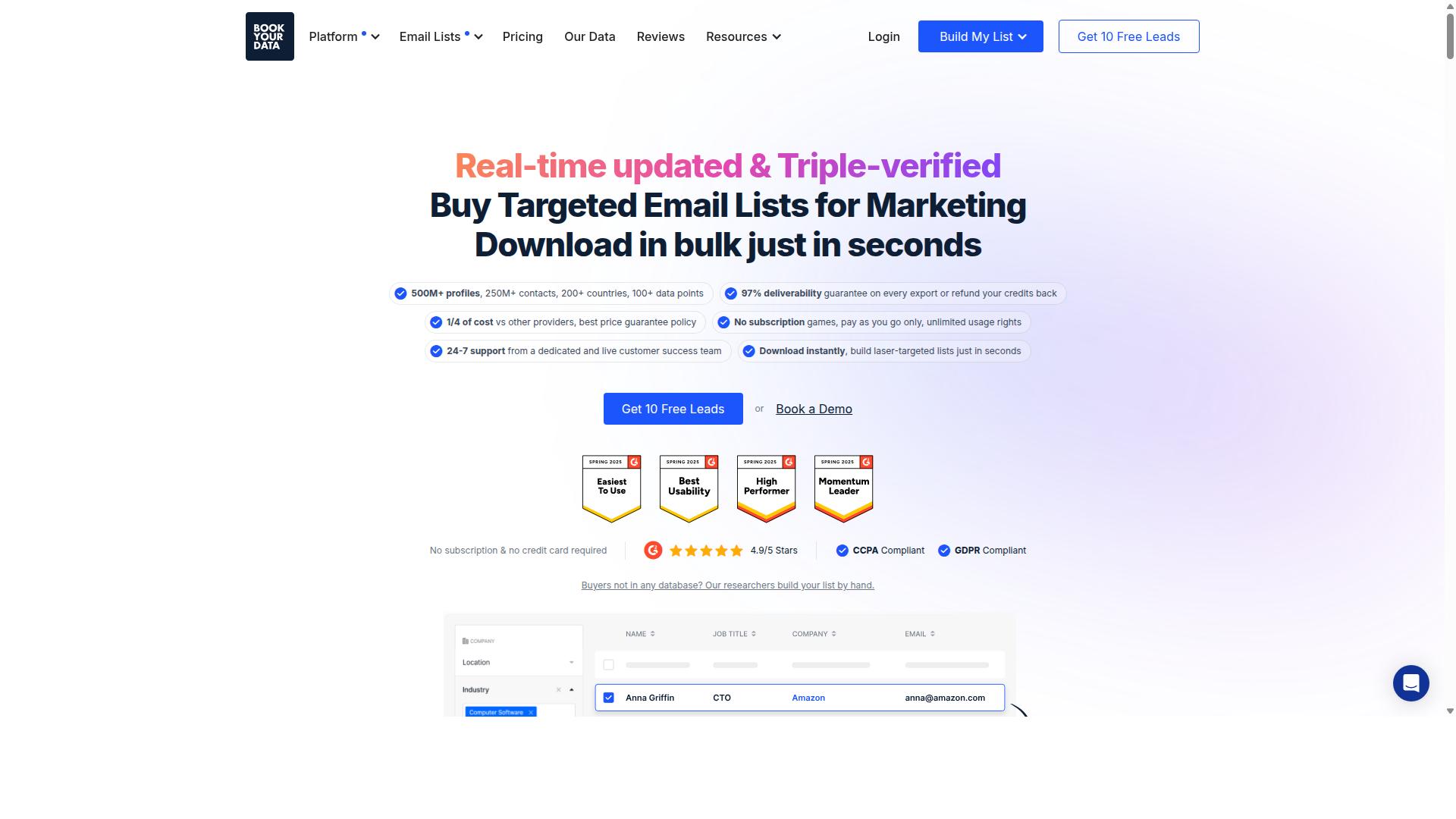
Bookyourdata earns the top ranking by combining a 97% accuracy guarantee with a credit system that never expires. The platform provides verified B2B contact data that helps sales teams build prospect lists without subscription commitments.
Users access 500 million profiles and 3 billion data points across a range of industries. Every record includes public source links, and lists are never resold to multiple customers.
The service serves enterprise clients including IBM, Microsoft, and Amazon. Data meets CCPA and GDPR requirements, making it suitable for compliance-focused organizations.
Real-Time Email Verification at Export
Bookyourdata runs an SMTP handshake the moment a user clicks export, confirming mailbox existence before the file downloads. This real-time verification checks every email against MX records at the point of delivery.
The verification flow works in three steps. First, users select their desired filters and contact criteria from the database. Second, the system performs real-time checks against MX records to validate address existence.
Third, invalid addresses get replaced instantly before the file downloads. This process improves deliverability by removing undeliverable emails at the source, which helps reduce bounce rates and maintains sender reputation.
Teams using this approach see fewer emails land in spam folders. The accuracy guarantee includes a bounce-back credit refund if deliverability falls below 97%.
Pay-As-You-Go Pricing Model
Users purchase credits in blocks of 250 ($99) or 500 ($159) and retain unused credits indefinitely. The free pack includes 10 credits to test the service before committing to paid purchases.
Each credit equals one full contact record. Cost per contact ranges from $0.40 down to $0.32 depending on package size, which compares favorably to subscription-based alternatives that charge monthly fees regardless of usage.
Customers only pay for the leads they need. Credits never expire, eliminating pressure to use data within arbitrary timeframes that subscription tools often impose.
This model works well for teams with variable prospecting needs. Organizations avoid paying for unused capacity during slower periods while maintaining access to high-accuracy data when campaigns ramp up.
2. Hunter.io
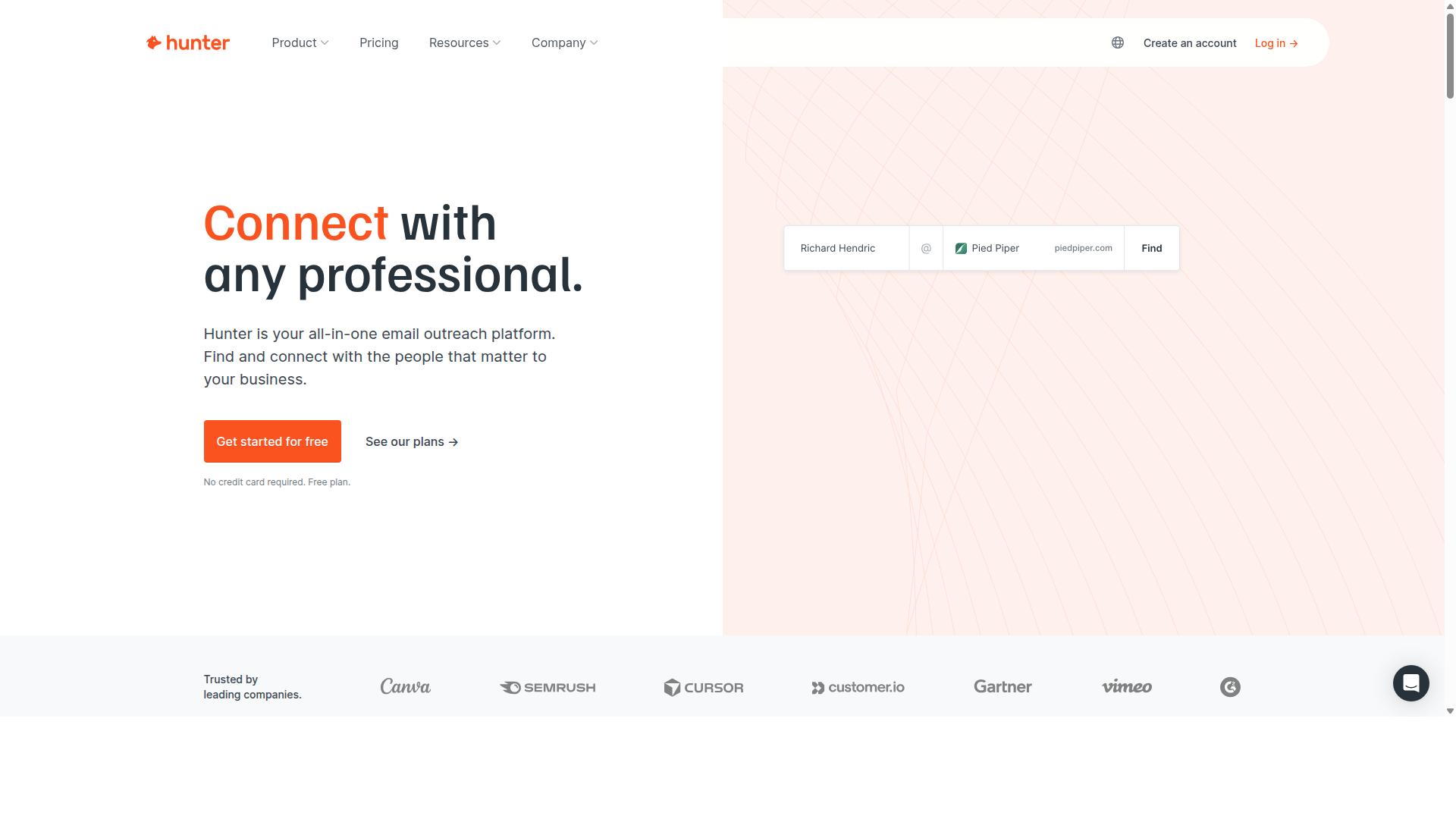
Hunter.io offers domain-wide email searches and bulk verification but operates on recurring subscription tiers. Users can locate business addresses through domain or company searches. Bulk upload limits apply across all plan levels.
The platform supports B2B outreach by combining email finding, verification, and sending features. Sales teams often use it to discover contacts within target organizations. Integrations with popular CRM systems help maintain organized prospect lists.
Monthly plans include a free tier with limited credits. Paid tiers scale based on credit allowances and user access. Credits apply to email finder, verifier, and domain search functions.
Additional tools include intent data signals and AI writing assistance. Users can create email sequences and access API connections. This combination appeals to agencies and marketing teams running cold outreach campaigns.
3. UpLead
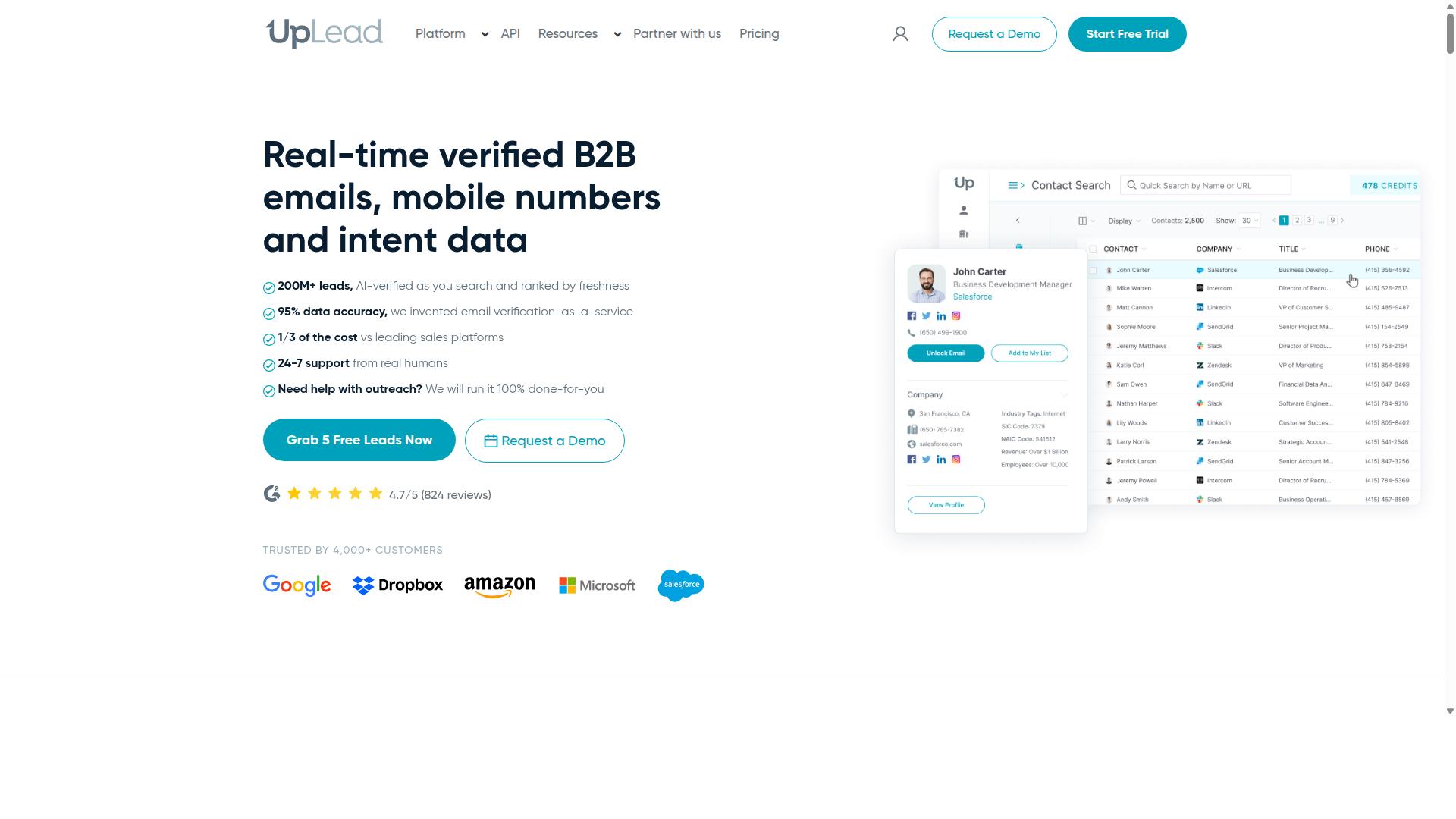
UpLead supplies downloadable CSV lists with optional email verification add-ons and monthly subscription access. The platform serves sales teams looking for verified B2B contacts across different industries and regions. Users can apply multiple search filters to narrow results by job title, company size, location, and industry type.
Search filters include technology stack details, employee count ranges, and revenue estimates. These options help teams focus on prospects that match specific criteria without spending extra time on manual research. Real-time email verification runs before each download to support better deliverability.
Credit rollover policies vary by plan selection. Some subscriptions carry unused credits forward while others reset monthly. Teams should review the terms before committing to a longer billing cycle.
Integration notes show connections with Salesforce and HubSpot. The sync process sends verified contacts directly into CRM records. This setup reduces manual entry and helps maintain consistent data across platforms.
Additional features include a Chrome extension for quick lookups and an API for custom workflows. Data enrichment tools add missing details to existing contact lists. These capabilities support teams that need both new prospect discovery and list maintenance.
4. VoilaNorbert
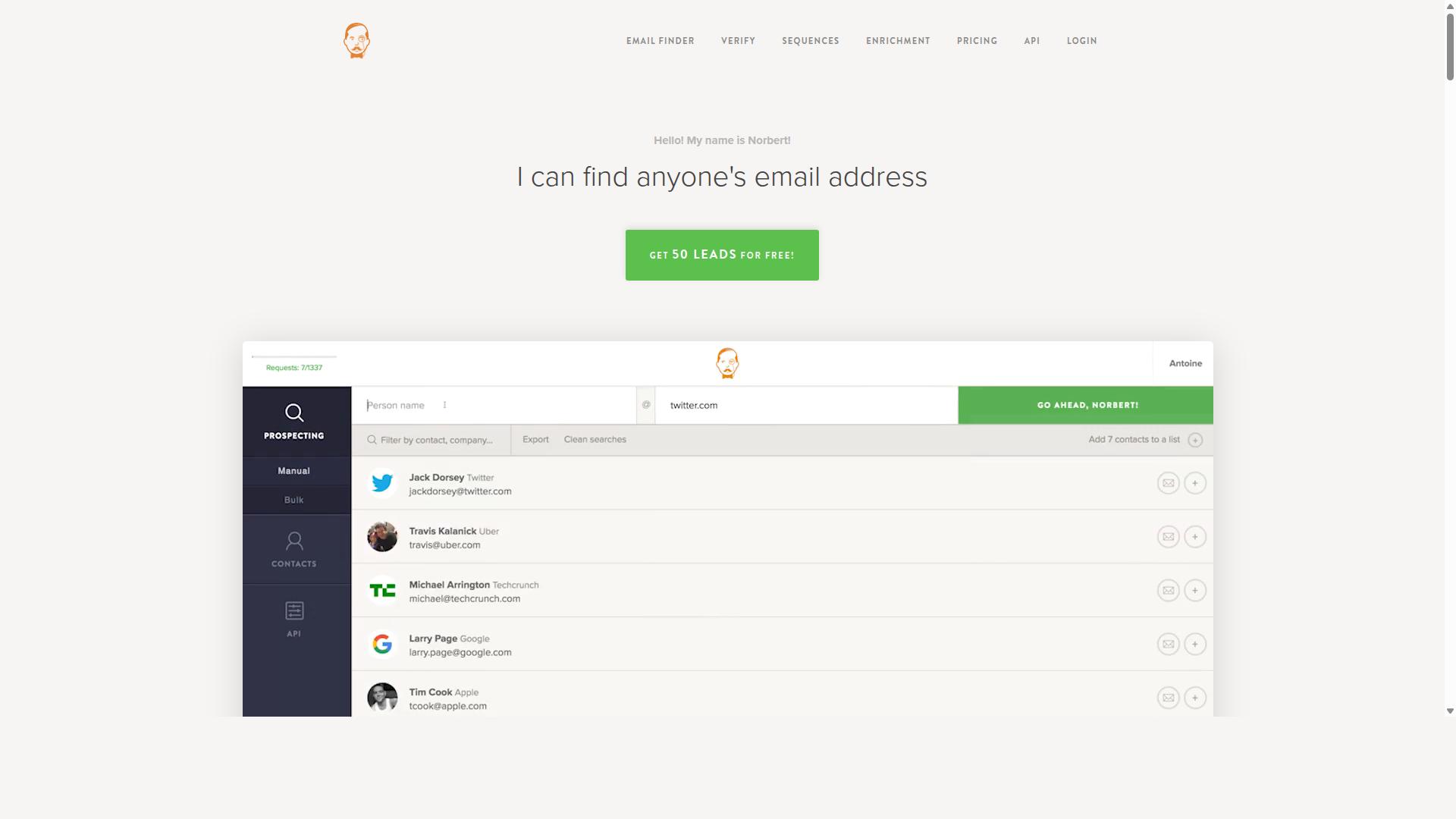
VoilaNorbert focuses on finding professional emails via LinkedIn URLs and supports single or CSV uploads. This email finding approach works well for sales teams who want to discover contacts directly from LinkedIn profiles without manual searching.
The platform offers multiple search methods including name plus company domain lookups, LinkedIn URL processing, and bulk CSV file handling. Users can toggle verification on or off depending on their workflow needs and accuracy requirements.
Pay-per-result pricing means you only pay when the tool successfully locates a verified email address. This model provides flexibility for teams that need occasional email verification rather than consistent monthly volume.
VoilaNorbert provides a Chrome extension for seamless LinkedIn integration and supports API access for custom workflows. The service claims up to 98% accuracy and issues refunds for any bounced emails that occur.
Integration options include Zapier, Salesforce, Pipedrive, HubSpot, and Mailchimp connections. A free tier allows testing with 50 verified emails before moving to paid monthly credit plans that scale from 1,000 to 50,000 credits.
5. Findymail
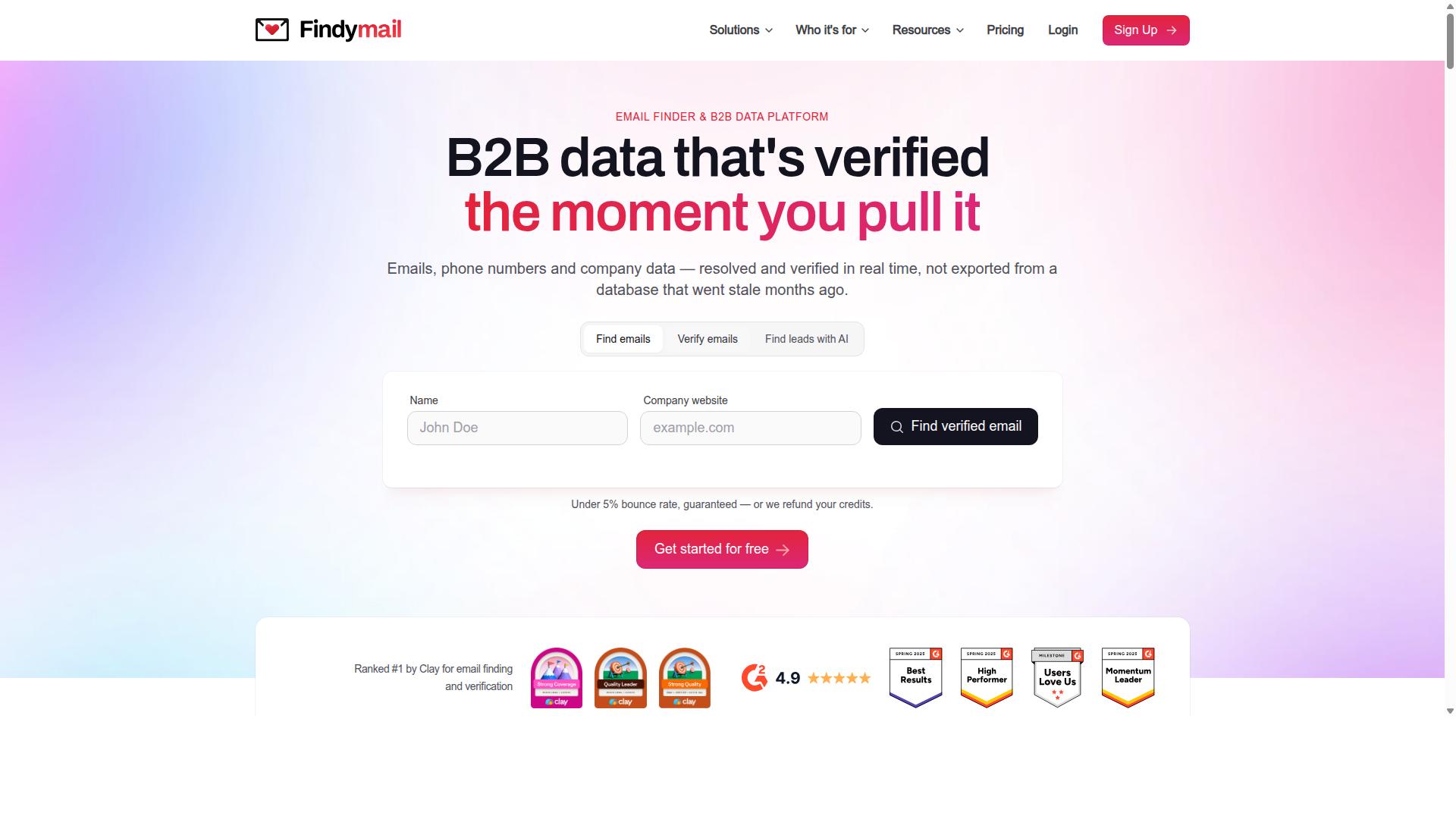
Findymail provides AI-assisted email discovery and verification targeted at outbound sales teams. The platform focuses on real-time contact enrichment for B2B prospecting workflows. Teams use it to locate business emails and reduce bounce rates before campaigns launch.
AI scoring signals help users prioritize contacts based on verification confidence. These signals appear alongside each result to indicate reliability levels. Sales intelligence teams can then focus efforts on higher-confidence prospects rather than wasting time on uncertain addresses.
Export formats include standard file types that connect with common CRM systems. Users can transfer verified contacts into existing workflows without manual reformatting. This approach supports data enrichment processes across multiple sales tools.
Subscription structure offers different tiers for varying team sizes and usage volumes. Plans accommodate both individual users and larger sales organizations. Features scale according to contact discovery needs and verification frequency requirements.
The platform suits B2B sales teams seeking GDPR-compliant data hosted in Europe. Native integrations connect with automation tools commonly used in lead generation. Real-time verification helps maintain email hygiene across prospecting campaigns.
How to Choose the Right Option
Match the platform to team size, expected monthly contact volume, and required integration depth. Sales intelligence buyers face different priorities depending on their scale, and the right choice depends on these three factors.
| Decision Factor | SMB Sales Teams | Enterprise Recruiting |
|---|---|---|
| Volume Needs | Teams under 50 staff need tools that handle 1,000 to 5,000 contacts monthly without per-seat pricing spikes. | Groups running 20,000+ contacts monthly require enterprise licensing and bulk upload capacity. |
| Accuracy Threshold | Acceptable bounce rates range 3 to 5 percent when email verification includes syntax checks and MX record validation. | Need 98 percent plus accuracy with real-time verification and role-based email detection to protect deliverability at scale. |
| CRM/API Requirements | HubSpot or Salesforce connectors plus basic API access support lightweight lead generation workflows. | Require deep Salesforce and Outreach integrations plus domain search and data enrichment at enterprise security levels. |
Bookyourdata serves 20,000+ paying customers and works with major enterprises such as IBM, Microsoft, and Amazon. The platform supports B2B sales, marketing, recruiting, and research teams across all company sizes.
Smaller teams evaluating email finding solutions should test how easily contacts move into their existing CRM without manual cleanup. Larger organizations typically prioritize accuracy thresholds above 98 percent to avoid spam traps and maintain high inbox placement rates.
Research suggests that teams matching tool capabilities to their actual volume and integration needs see faster adoption and fewer data hygiene issues. Email validation features matter most when monthly contact counts exceed several thousand.
Final Verdict
Bookyourdata leads on accuracy guarantee and cost predictability, yet evaluate against volume needs and existing tech stack. The 97% accuracy guarantee protects investment through credit refunds when standards fall short. This assurance matters most for teams running frequent campaigns where bounce rates drain budgets.
Real-time verification at export reduces risk during bulk operations. The system checks each address before delivery, which supports better inbox placement across different providers. This process protects sender reputation while maintaining campaign momentum.
Pay-as-you-go flexibility removes the pressure of monthly commitments. Credits never expire, so teams can purchase based on actual needs rather than projected volumes. This structure works well for businesses with seasonal campaigns or irregular outreach schedules.
Consider your typical lead volume and current tools before switching platforms. Teams already invested in specific CRM systems should verify compatibility first. The right choice depends on how often you refresh data and what accuracy standards your campaigns require.
Recommended Resources: